When safety, hygiene, and structural integrity are top priorities for workshop division, traditional wire mesh or combined-type fences often fall short in seamless protection, debris blocking, and cleanability. This is where All Perforated Type Workshop Isolation Fence stands out. Also known as full-panel perforated isolation fencing, it is widely recognized across manufacturing, food processing, and precision engineering sectors for its one-piece rigid structure, uniform perforation design, and exceptional adaptability to harsh industrial environments.
In this article, we break down everything you need to know about All Perforated Workshop Isolation Fence. We walk you through its unique structural design, technical parameters, functional benefits, applicable scenarios, material differences, and practical purchasing factors, helping you make an informed investment for your workshop’s spatial management and safety needs.

What Is All Perforated Type Workshop Isolation Fence? How It Differs From Regular Fencing
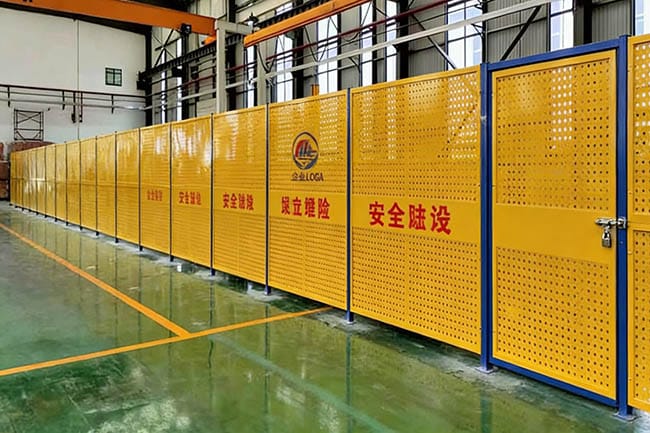
All Perforated Type Workshop Isolation Fence is a fully enclosed protective system constructed from a single piece of perforated metal plate (no combined mesh or separate panels). Unlike traditional wire mesh fences (with loose wire intersections) or upper-mesh-lower-perforated combined fences, its entire panel features uniform, precision-punched holes, forming a seamless, rigid barrier that eliminates weak points and gaps.
The core difference lies in its integral structure: while wire mesh fences rely on welded wire intersections (prone to loosening) and combined fences have structural joints (risk of debris accumulation), the all-perforated design delivers consistent strength across the entire panel. It also offers superior debris blocking, dust control, and cleanability—critical for environments requiring strict hygiene or precision protection.
Standard Technical Specifications of All Perforated Workshop Isolation Fence
All Perforated Isolation Fence follows strict industry standards for consistent performance, with full customization available to meet bespoke project requirements. The standard parameters are listed below:
- Plate Thickness: 2.0mm–8.0mm (3.0mm–5.0mm standard for general use; 6.0mm+ for heavy-duty protection)
- Hole Specification: Hole diameter 3mm–20mm (common options: 5mm, 8mm, 10mm); hole pattern: square, round, or hexagonal (round holes for optimal ventilation and debris blocking)
- Open Area Ratio: 30%–60% (adjustable based on ventilation and visibility needs)
- Panel Dimension: Height 1000mm–3000mm, Width 1200mm–2500mm (custom sizes available)
- Surface Finishing: Hot-dip galvanizing, PVC powder coating, or stainless steel (304/316)
- Structural Feature: One-piece perforated plate (no joints), reinforced with frame borders (20mm×40mm rectangular steel) for enhanced rigidity
Key Benefits of Installing All Perforated Workshop Isolation Fence
Workshop managers and contractors prefer all-perforated fencing for its perfect balance of seamless protection, hygiene compliance, and long-term cost efficiency—addressing pain points of traditional fencing solutions.
1. Seamless Anti-Intrusion & Debris Blocking
The one-piece perforated structure eliminates gaps between wires or panels, preventing small parts, tools, or debris from falling through. Its uniform hole size (≤10mm standard) effectively blocks weld spatter, metal shavings, and dust, reducing cross-contamination between workshop zones and protecting equipment from damage. For high-precision or clean environments, this seamless design is irreplaceable.
2. Superior Structural Rigidity & Impact Resistance
Constructed from integral metal plates (Q235 steel, stainless steel) with reinforced frames, the fence resists deformation and impact from forklifts, pallet jacks, or heavy machinery. Unlike wire mesh (prone to wire breakage), the all-perforated panel maintains structural integrity even under repeated collisions, ensuring long-term reliability in high-traffic workshops.
3. Hygienic & Easy to Clean
The smooth surface of the perforated plate (no rough wire edges or joint crevices) avoids dust accumulation and bacterial growth. It can be quickly cleaned with water, steam, or industrial cleaners—critical for food processing, pharmaceutical, or electronic workshops that must comply with GMP, ISO 22000, or cleanroom standards. No more tedious cleaning of wire mesh intersections!
4. Balanced Ventilation & Visibility
While solid steel plates block airflow and visibility, all-perforated fencing features precision-calculated hole patterns that maintain 30%–60% open area. This ensures adequate ventilation to prevent heat buildup around equipment and clear sightlines for supervisors to monitor operations—striking a perfect balance between protection and practicality.
5. Corrosion Resistance & Long Lifespan
With premium surface treatments, the fence withstands harsh industrial environments:
- Hot-dip galvanizing: Resists rust and humidity for 10+ years in general workshops.
- PVC powder coating: Adds a colorful, scratch-resistant layer (available in yellow, blue, green) for enhanced corrosion resistance and aesthetics.
- Stainless steel (304/316): Ideal for chemical, coastal, or high-humidity environments, offering 15–25 years of service life with zero rusting.
6. Flexible Customization & Fast Installation
The modular panel-and-post design supports tool-friendly on-site installation. Clients can customize:
- Plate thickness and hole size (e.g., smaller holes for dust control, larger holes for ventilation).
- Panel height/width to fit workshop layouts (e.g., 2.0m height for machinery isolation, 3.0m for high-risk zones).
- Accessories: Swing doors, sliding doors, observation windows, or warning signs to enhance functionality.
Typical Applications for All Perforated Workshop Isolation Fence
Due to its seamless protection, hygiene, and rigidity, all-perforated fencing is the ideal solution for workshops requiring strict spatial management and compliance:
- Food & Pharmaceutical Plants: Isolating production lines, storage zones, or packaging areas to meet GMP hygiene standards.
- Electronic & Precision Engineering: Creating clean zones for sensitive equipment; the smooth surface avoids electrostatic dust accumulation.
- Automotive Manufacturing: Separating welding zones, painting booths, or assembly lines to block weld spatter and debris.
- Chemical & Corrosive Environments: Using stainless steel or dual-coated panels to resist chemical erosion and humidity.
- Logistics & Warehousing: Dividing hazardous material storage, pallet zones, or forklift channels with impact-resistant panels.
- Medical Device Workshops: Maintaining sterile environments with easy-to-sterilize, gap-free fencing.
Two Main Material Finishes for All Perforated Fencing
Select the right surface treatment based on your workshop environment, hygiene requirements, and budget:
1. Hot-Dip Galvanized Finish
Features a thick zinc layer (≥80μm) for maximum rust resistance. It is the cost-effective choice for general industrial workshops, warehouses, and indoor environments. Ideal for projects prioritizing durability over color customization.
2. PVC Powder Coated Finish
Built on a galvanized steel base with a 60–80μm plastic coating. Available in industry-standard colors (yellow for warning zones, blue for general division), it combines corrosion resistance with aesthetic appeal. Perfect for commercial workshops, cleanrooms, or facilities requiring visual zone differentiation.
3. Stainless Steel (304/316) Finish
Offers superior corrosion resistance and hygiene. 304 stainless steel is suitable for humid or mild chemical environments, while 316 stainless steel excels in coastal, acidic, or pharmaceutical settings. The natural metallic surface is easy to sanitize and meets strict food-grade standards.
Pro Tips for Buying Quality All Perforated Workshop Isolation Fence
Low-quality perforated fencing may have uneven holes, weak frames, or peeling coatings—compromising safety and lifespan. Focus on these key factors when sourcing:
- Plate Quality: Ensure the base plate is high-grade Q235 steel or stainless steel (no recycled or thin-gauge materials).
- Perforation Precision: Check for uniform hole size, smooth edges (no burrs), and consistent open area ratio (avoid blocked or deformed holes).
- Structural Integrity: Verify the frame is firmly welded to the perforated panel (no gaps) and the overall panel is flat (no warping).
- Coating Quality: For galvanized finishes, confirm zinc layer thickness ≥80μm; for powder coating, check for even coverage (no peeling or blistering).
- Manufacturer Credibility: Choose suppliers with ISO9001 certification, on-site production capacity, and project experience in your industry.
Frequently Asked Questions
Q1: What is the difference between All Perforated Fence and wire mesh fence?
A1: All Perforated Fence is a one-piece rigid panel with uniform holes, offering seamless debris blocking and easy cleaning. Wire mesh fence has loose wire intersections (prone to gaps and dust accumulation) and lower impact resistance.
Q2: Can All Perforated Fence be used in cleanrooms or food workshops?
A2: Yes. Its smooth, gap-free surface and easy-to-clean design meet GMP and food-grade hygiene standards. Choose stainless steel or powder-coated finishes for optimal sanitization.
Q3: How long will an All Perforated Fence last?
A3: It depends on the finish: galvanized (10–15 years), powder-coated (12–18 years), and stainless steel (15–25 years) in outdoor/industrial environments with minimal maintenance.
Q4: Can the hole size be customized?
A4: Yes. Common custom hole sizes range from 3mm (dust control) to 20mm (enhanced ventilation). Manufacturers can adjust hole patterns (round, square) and open area ratio based on your needs.
Q5: Is All Perforated Fence more expensive than traditional wire mesh?
A5: While the initial cost is slightly higher, its longer lifespan, zero frequent maintenance, and compliance benefits (avoiding hygiene fines) make it more cost-effective in the long run—especially for high-standard workshops.
Conclusion
All Perforated Type Workshop Isolation Fence remains the most reliable and versatile solution for modern workshops requiring seamless protection, hygiene compliance, and structural durability. Its one-piece perforated design eliminates the limitations of traditional fencing, balancing debris blocking, ventilation, visibility, and cleanability—making it suitable for food, electronic, automotive, and chemical industries.
Whether you need to isolate high-risk zones, maintain clean environments, or comply with strict safety standards, all-perforated fencing delivers consistent performance and long-term value. If you require customized solutions (e.g., special hole sizes, stainless steel materials, or large-scale project support), professional manufacturers can provide tailored designs to meet your workshop’s unique needs.