


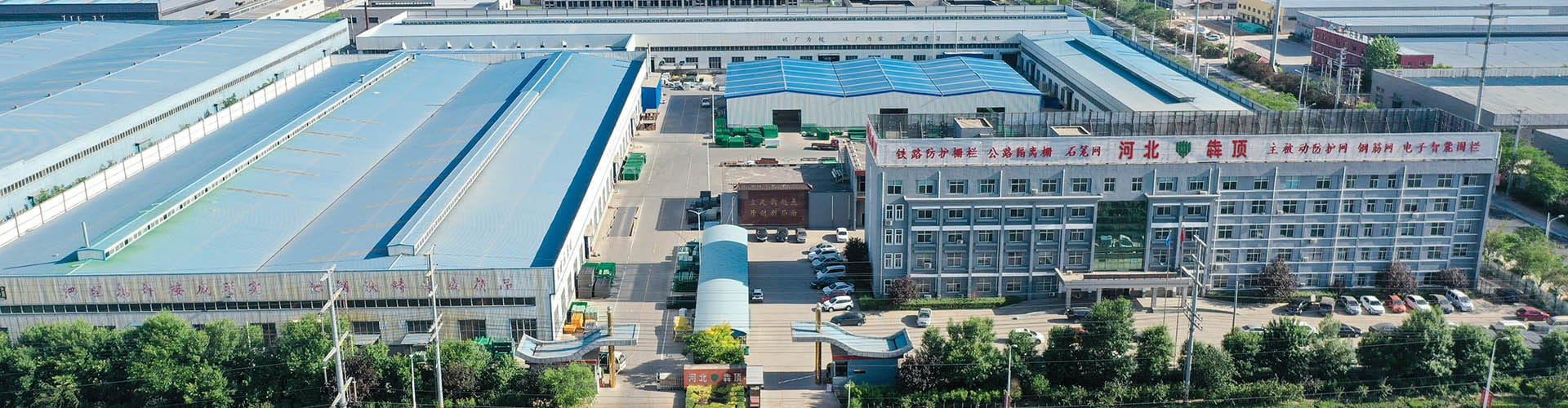
Last autumn we took on a project for a steel service center in Brisbane, Australia. The yard stocks and processes hot-rolled coil, plate and structural sections for the local construction market. The existing perimeter between the production bay and the customer pickup area was a modular bolted mesh fence — the kind you can put up in a day. It had been installed three years earlier, and in that time it had been hit by a reverse-driving forklift at least a dozen times. Panels were bending, posts were leaning, and two sections had been pulled out of line so badly that the gap between a pedestrian walkway and a 10-tonne coil carrier was down to less than half a meter. The insurer flagged it at the annual audit.
The customer’s first thought was to replace it with the same modular bolted fence, “but heavier this time.” Our engineer walked the yard, watched a coil carrier back up with a 12-tonne coil on its forks, and recommended a fully welded fence instead. This case walks through why welded construction was the right answer, what we shipped, and how the install held up after the first year of forklift traffic.
Why Bolted Modular Fence Kept Getting Hit and Bending
Modular bolted fence works well for zoning, pedestrian separation and light machine guarding. It is fast to install, easy to reconfigure, and cheap per meter. But it has a structural weak point: every joint is a bolt. Under repeated impact, those bolts work loose, the brackets bend, and the panel starts to move in its frame.
Repeated forklift impact, not a one-off
A steel service center is not a pick-and-pack warehouse. Forklifts here carry 8-tonne coils, move at walking pace but with enormous momentum, and back up constantly because the load blocks forward visibility. A glancing hit on a bolted panel bends the bracket. Hit it again next week and the panel twists. The customer was spending more on fence repairs every year than the fence itself cost originally.
Pedestrian-vehicle separation with no margin
The yard had a pedestrian walkway running between the customer pickup lane and the shear and cut-to-length area. The insurance underwriter wanted a physical barrier that a forklift would not push over. A bolted panel that flexes on impact does not meet that requirement. A fully welded panel — one rigid piece, posts anchored properly — does. The whole fence acts as a single impact-resistant wall rather than a row of bolted-together sections.
No onsite reconfiguration needed
The customer had bought the modular fence originally because they thought they might move it as the yard changed. In three years, they never did. The production layout was fixed: shear, cut-to-length, press brake, pickup. Once we pointed that out, they agreed there was no benefit to keeping the bolted system, and the cost of welded vs bolted was a modest upcharge for a big structural upgrade.
Specs We Supplied
After two site walks and a drawing review with the yard manager, we locked the following BOM.
Welded panels and posts
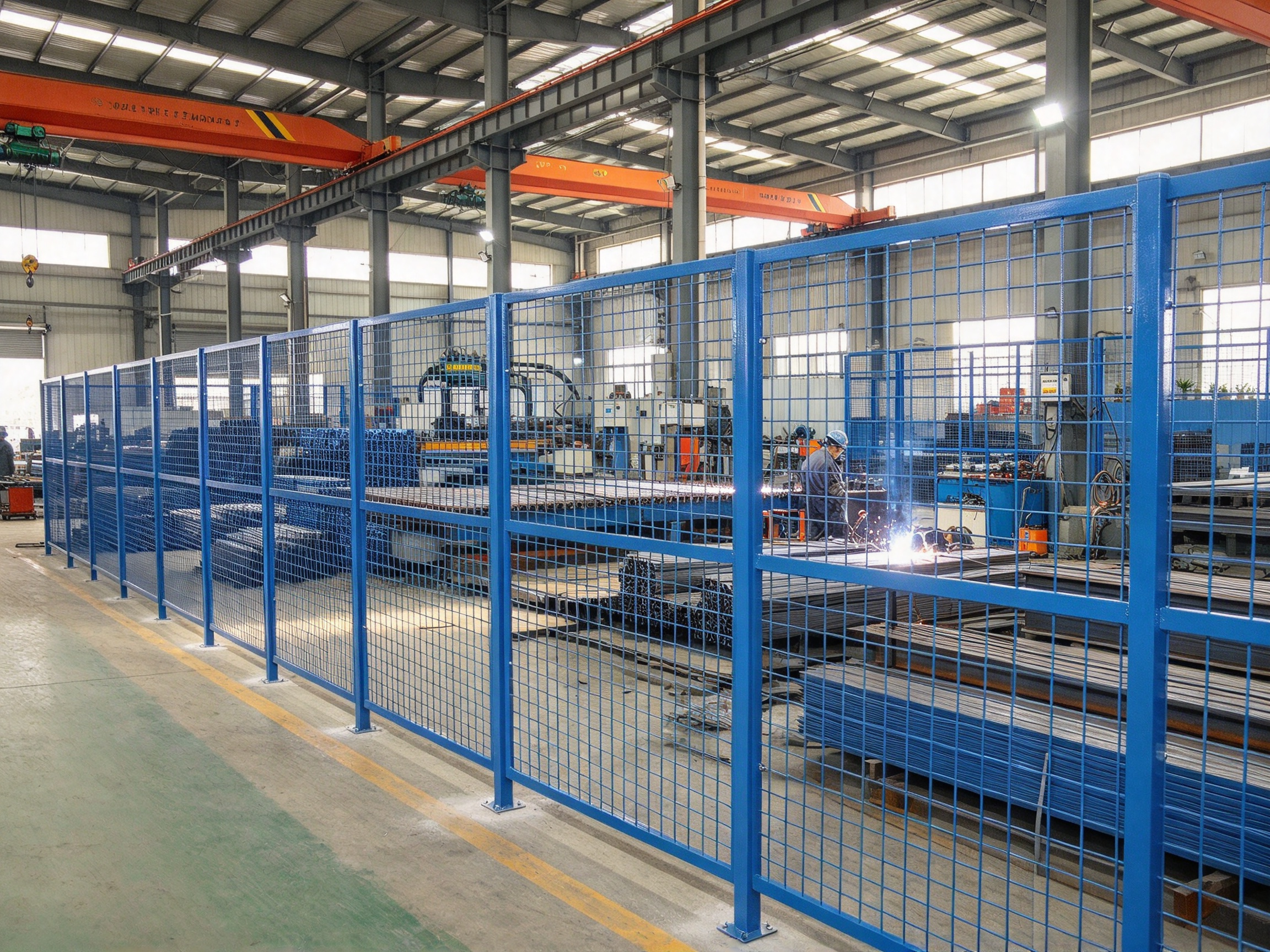
Panels were 2,000 mm high × 1,500 mm wide, mesh 50 × 100 mm, wire diameter 5.0 mm (up from the 4.0 mm on the old bolted fence), fully welded to a 40 × 40 × 2.0 mm frame tube. Posts were 80 × 80 × 3.0 mm heavy square tube — noticeably thicker than the 60 × 60 mm posts on the old fence — set on 200 × 200 × 10 mm floor plates, anchored with four chemical anchors into the existing concrete slab. Total fence length was 620 meters around the production bay and the customer pickup lane.
Surface finish for a steel yard environment
Inside the shed, we used hot-dip galvanized panels with a black powder coat top — the customer wanted the yard to look tidy for pickup customers. On the external perimeter facing the Queensland sun and occasional rain, we specified hot-dip galvanized only, with no powder coat, because UV exposure chips paint over time and the galvanized finish alone handles the coastal humidity. Both finishes carry the same structural spec; only the top coat differs.
Gates and access points
We installed three 1,200 mm single-leaf pedestrian gates for staff access, with internal push bars and external locks. For forklift and coil carrier access, we supplied four 3,500 mm double-leaf swing gates, each with heavy-duty butt hinges rated for the gate’s weight, drop bolts to hold them open during shift change, and lockable padlock hasps. At the customer pickup lane, we added a 4,000 mm sliding gate on a ground track, operated manually, for when the whole lane needed to be closed outside business hours.
Impact protection at high-risk corners
At the three corners where the yard manager told us forklifts turned tightest, we added 1,000 mm high steel bollards in front of the fence, set in concrete and painted safety yellow. The bollards take the first hit instead of the panel. The customer told us later that two of those bollards have already been dented, and the fence behind them is untouched.
Installation and First Year in Service
The customer kept the yard running throughout the install. We worked in sections: close off 30 meters of walkway, remove the old bolted fence, set new posts, hang new panels, reopen the walkway, move to the next section. Eight installers finished the 620 meters in six working days, working around the normal forklift traffic.
Anchoring into existing concrete
The slab was existing, with embedded steel reinforcement the yard manager did not want us to hit. Our crew used a rebar scanner before drilling, and switched from chemical anchors to expansion anchors where rebar was too close to the surface. No post needed to be repositioned after drilling — which the yard manager said was the first time that had happened on a fencing project in the yard.
Gate alignment and adjustment
The 3.5 m double-leaf swing gates are heavy. We set them on adjustable butt hinges so the yard’s own maintenance crew can re-align them after a hard impact, without calling us back. Six months after install, the yard manager reported the gates were still opening and closing smoothly — a contrast to the old modular gates, which had started sticking within a year.
What the Yard Says After 12 Months
We checked in a year after handover. The yard has had the same forklift traffic, the same tight reversing corners, the same summer humidity. The fence has been hit — you can see scuff marks on the powder coat in a couple of places — but no panel has bent, no post has leaned, and no bolt has worked loose, because there are no bolts to work loose. The insurance underwriter came back for a follow-up audit and signed off without conditions.
The customer has already asked us to quote the next stage: extending the welded fence along the new plate storage shed they are building this year. They are also replacing a smaller bolted section near the office entrance that they previously left alone, on the same welded spec.
If you are running a steel service center, a heavy fabrication shop, an automotive stamping plant, or any yard where forklifts carry heavy loads and impacts are part of daily operation, contact BDINDUSTRIAL. Send us your site layout, the vehicle types that will pass the fence line, and the corners where you know impacts happen. We will come back with a welded panel spec, post size and bollard layout within one working day.
FAQ
1. What is the difference between all welded fence and modular bolted fence?
Welded fence panels are welded into a rigid frame at the factory. Modular bolted panels clip to posts with bolt-on brackets. Welded is stronger and more impact-resistant, with no bolts to loosen over time. Modular is faster to install and easy to reconfigure. Choose welded for high-impact, heavy-traffic areas; choose bolted for light zoning, machine guarding or layouts that may change.
2. Is all welded fence more expensive than bolted?
Up front, welded typically costs 15–30% more per meter, because of the welding labor and heavier posts. Over 5–10 years, welded is usually cheaper because you spend nothing on bracket replacement and bolt tightening. For high-impact sites, the payback often comes in the first two years.
3. Can welded fence be moved or reconfigured later?
It is possible, but not easy — welded panels have to be unbolted from posts, and the posts themselves stay anchored. If you expect to reconfigure the layout every year, bolted modular is the better choice. If the layout is fixed for 5+ years, welded is the right call.
4. How do you handle impacts at corners without damaging the fence?
We add steel bollards in front of the high-risk corners, set in concrete and painted safety yellow. The bollard takes the first hit. On the steel service center project, bollards at the three tight corners have been hit and dented, while the fence behind them is untouched.
5. Can you match our existing yard color or brand?
Yes. We powder coat welded panels to most RAL colors. For outdoor exposed sites, we often recommend hot-dip galvanizing without powder coat, because UV chips paint over time. We will recommend the finish based on where the fence sits, not just what looks tidy today.