


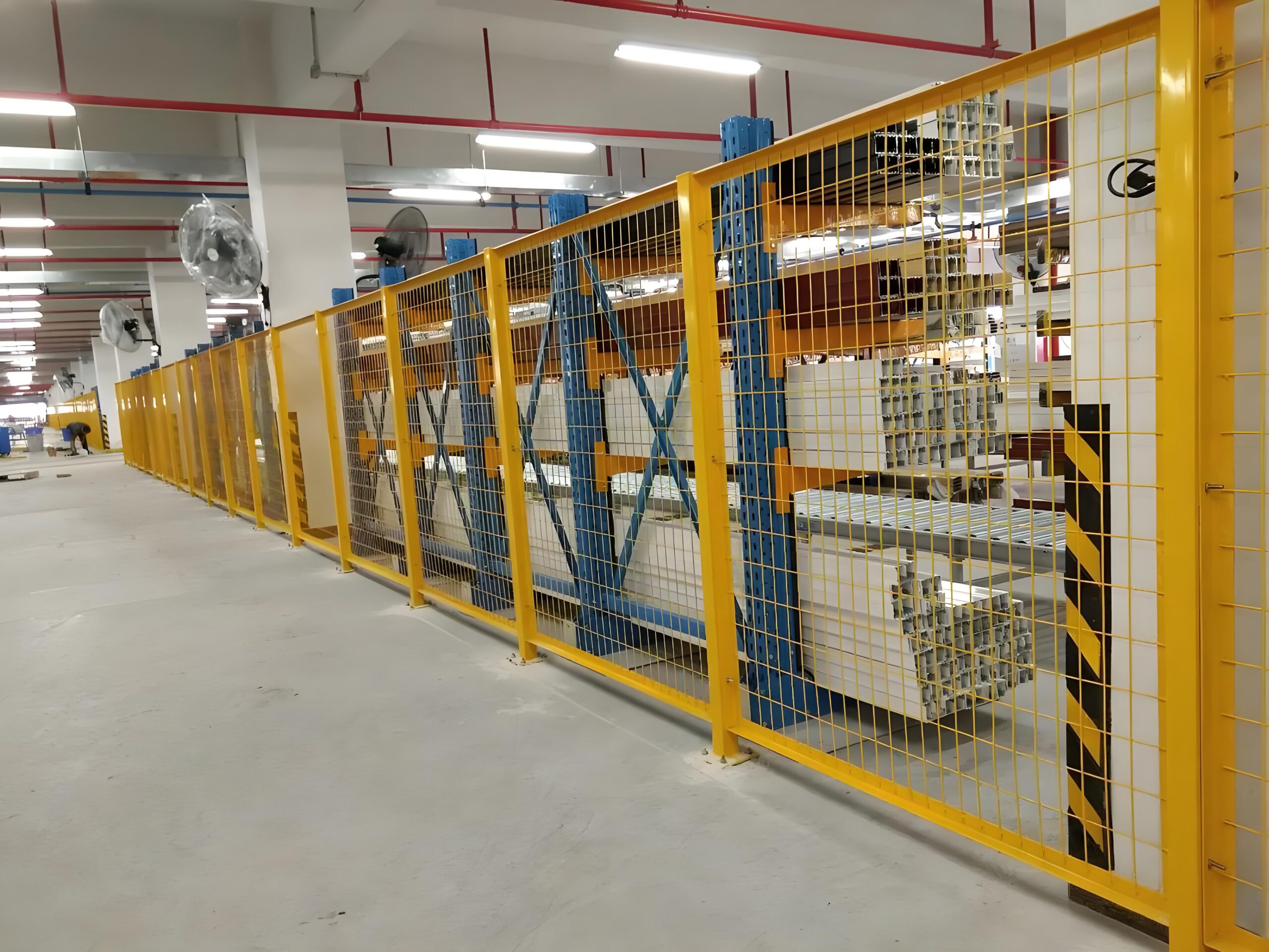
When a factory has multiple production lines, heavy equipment, forklifts, and pedestrian routes operating in the same space, separating these areas becomes an important part of workshop planning. In one recent engineering project, BDINDUSTRIAL All Welded Type Workshop Fence was selected to create clear boundaries around a busy production area.
The customer needed a safety fence that was strong enough for daily industrial use, easy to install, and visually consistent with the existing workshop layout. Rather than building permanent walls, the project used a modular welded fence system to create practical separation without making the production area feel closed off.
Project Background
A Busy Production Environment
The project was located in a manufacturing facility where machinery, material handling equipment, workers, and maintenance personnel shared the same general workshop area.
Several zones required controlled separation, including:
- Production equipment areas
- Machine operating zones
- Material handling areas
- Pedestrian passages
- Maintenance spaces
- Restricted working areas
The existing layout made it difficult to clearly distinguish these zones. The customer therefore decided to install an All Welded Type Workshop Fence as part of the workshop safety upgrade.
Customer Requirements
Strong and Stable Construction
The fence needed to withstand normal industrial use and remain stable during long-term operation. A welded panel structure was preferred because the customer wanted a rigid and dependable fence system.
Clear Visibility
Although restricted areas needed to be separated, operators and supervisors still needed to see the equipment inside the protected zone.
The customer therefore preferred a fence design that provided physical separation without completely blocking visibility.
Easy Installation
The project had a relatively large installation area. A modular structure was required so that the fence could be assembled section by section and connected with the supporting posts.
Consistent Appearance
Because the fence would cover several areas of the production workshop, the customer wanted the panels, posts, doors, and accessories to have a consistent appearance.
Why All Welded Type Workshop Fence Was Chosen
Rigid Welded Structure
The welded panel design provides a firm structure compared with loosely connected mesh arrangements. The welded construction was well suited to the customer’s requirement for a stable industrial barrier.
Open Visibility
The panel structure allowed workers to observe equipment and production activities from outside the restricted area. This was useful for daily supervision and routine inspection.
Modular Installation
The fence was designed as a modular system. Individual panels could be connected to posts and other components, making the overall installation easier to organize.
Suitable for Industrial Layouts
The fence could be arranged around machinery and production areas without requiring permanent construction work. This gave the customer more flexibility when dividing the workshop.
Project Design and Preparation
Measuring the Installation Area
Before production, the required fence routes were reviewed according to the customer’s workshop layout.
The team considered the available floor space, equipment locations, pedestrian routes, access points, and areas requiring restricted entry.
Fence Height and Panel Dimensions
The fence height and panel dimensions were selected according to the intended application and project requirements.
Proper dimensions helped create a consistent boundary around the protected production area while keeping the installation practical.
Door and Access Planning
Access points were also considered during the design stage. Personnel needed controlled entrances for operation, inspection, and maintenance.
The fence system therefore incorporated suitable access doors at designated locations.
Manufacturing Process
Welded Panel Production
The fence panels were manufactured according to the confirmed dimensions. Welding was used to join the structural components and create a rigid panel.
Consistent welding and panel dimensions were important because multiple sections needed to align during installation.
Post and Accessory Processing
Supporting posts and connection components were prepared to match the fence panels.
The complete system included the components required to connect panels, establish access points, and secure the fence to the workshop floor.
Surface Finishing
The surface treatment was selected according to the customer’s requirements and the workshop environment.
A suitable finish helps the fence maintain its appearance and provides appropriate protection for normal industrial conditions.
Installation at the Factory
Positioning the Posts
The installation team first positioned the supporting posts along the planned fence route.
Accurate post positioning helped ensure that the panels could be installed smoothly and that the finished fence line remained straight.
Installing the Welded Panels
After the posts were secured, the welded panels were connected section by section.
The modular approach allowed the installation team to work progressively along the production area without needing to construct the entire barrier at once.
Installing Access Doors
Doors were installed at the planned entry points. This allowed authorized personnel to enter the restricted areas for production, maintenance, and inspection.
Results of the Engineering Project
Clearer Workshop Zoning
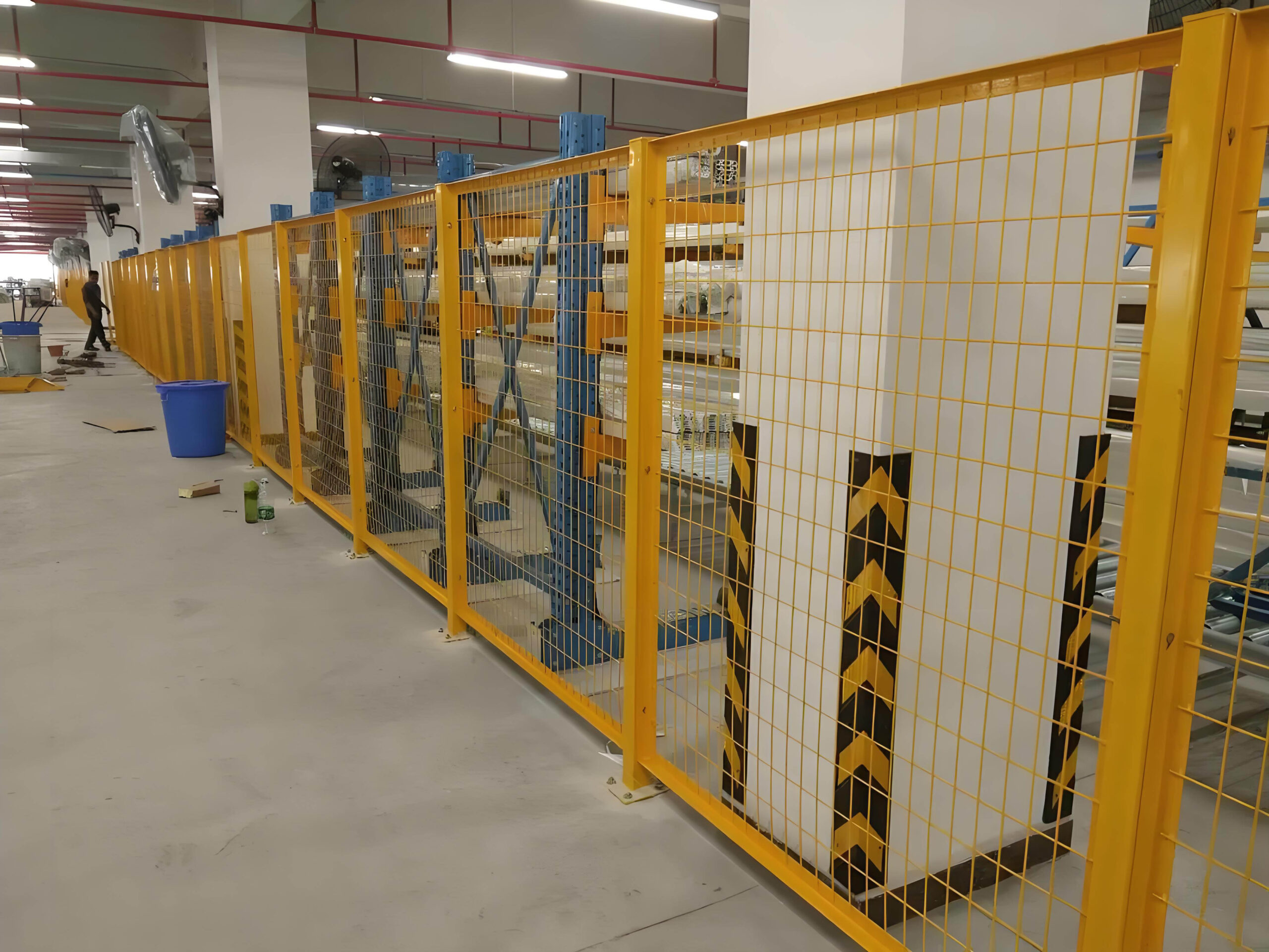
After installation, the production area was divided into clearly recognizable zones. Equipment areas and pedestrian routes became easier to distinguish.
Improved Physical Separation
The welded fence created a physical boundary between personnel and designated equipment areas, supporting the customer’s workshop safety management requirements.
Better Visibility
The open welded panel design allowed operators and supervisors to observe machinery without entering the restricted area.
More Flexible Workshop Management
Because the fence was modular, the customer could consider future layout changes without treating the barrier as a permanent building structure.
Why the Factory Source Matters
For an industrial fence project, product quality is only one part of the decision. Manufacturing capability, customization, accessory matching, packaging, and communication can all affect the final result.
Working directly with BDINDUSTRIAL allowed the customer to discuss the fence layout and product specifications before production. This helped the factory prepare the panels and accessories according to the project requirements rather than relying only on generic standard sizes.
Applications of All Welded Type Workshop Fence
Manufacturing Workshops
All Welded Type Workshop Fence can be used to separate production equipment from general workshop areas and pedestrian routes.
Machinery Protection Areas
The fence can create a defined boundary around machinery where controlled access is required.
Automation and Robot Areas
Welded safety panels can also be used for automated production zones and robot cells where visibility and physical separation are both important.
Warehouse and Logistics Areas
The same type of modular fence can be applied to selected warehouse areas, material handling zones, and equipment sections.
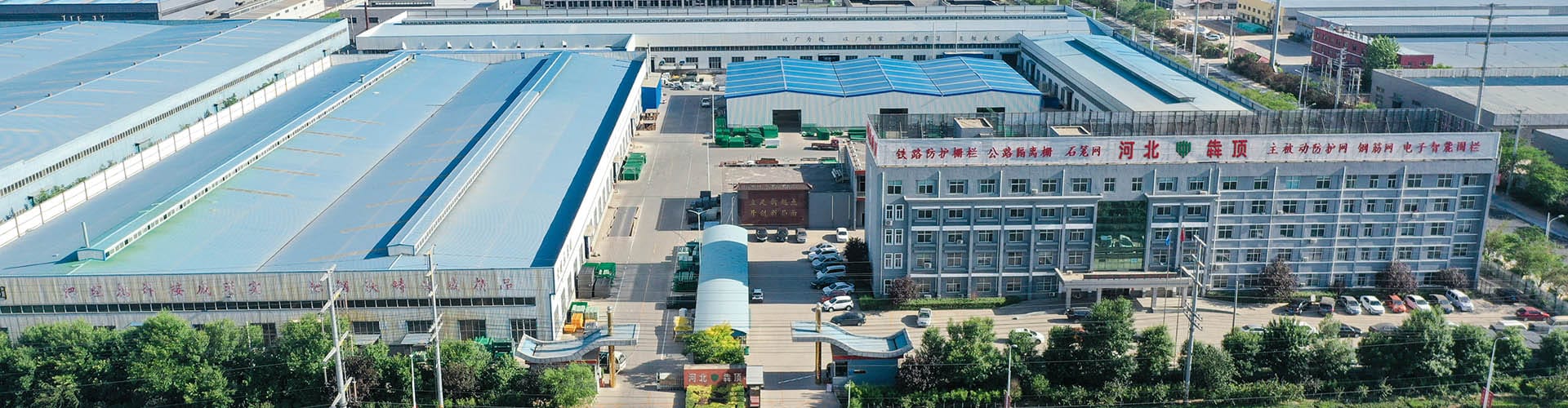
BDINDUSTRIAL All Welded Type Workshop Fence Factory
This engineering case shows how an All Welded Type Workshop Fence can be incorporated into a real production environment without significantly changing the building structure.
The combination of welded panels, supporting posts, access doors, and suitable accessories provided the customer with a practical way to divide the workshop into controlled areas.
BDINDUSTRIAL provides customized All Welded Type Workshop Fence solutions for factories, manufacturing plants, warehouses, machinery areas, automation facilities, and other industrial projects.
If you are planning a new workshop fence project, upgrading an existing factory, or need a customized safety fence system, contact BDINDUSTRIAL with your drawings, dimensions, application requirements, and estimated quantity. Our team can help you develop a suitable solution for your project.
FAQ
1. What is an All Welded Type Workshop Fence?
An All Welded Type Workshop Fence is an industrial safety fence made from welded panels and supporting components. It is designed to create physical separation around machinery, production lines, restricted areas, and other workshop zones.
2. Why was the All Welded Type Workshop Fence selected for this project?
The customer required a strong, stable, visible, and modular barrier for a busy production area. The welded panel structure met these requirements while allowing the workshop layout to remain open and visible.
3. Can BDINDUSTRIAL customize the welded workshop fence?
Yes. Fence height, panel dimensions, post configuration, doors, surface treatment, accessories, and other specifications can be discussed according to the project design.
4. Where can All Welded Type Workshop Fence be used?
It can be used in manufacturing plants, production workshops, machinery areas, automation zones, robot cells, warehouses, logistics facilities, and other industrial environments.
5. How can I get a quotation for an All Welded Type Workshop Fence project?
You can send BDINDUSTRIAL your workshop drawings, required dimensions, fence height, quantity, application, surface treatment requirements, and delivery location. The project details can then be reviewed for a suitable quotation.