


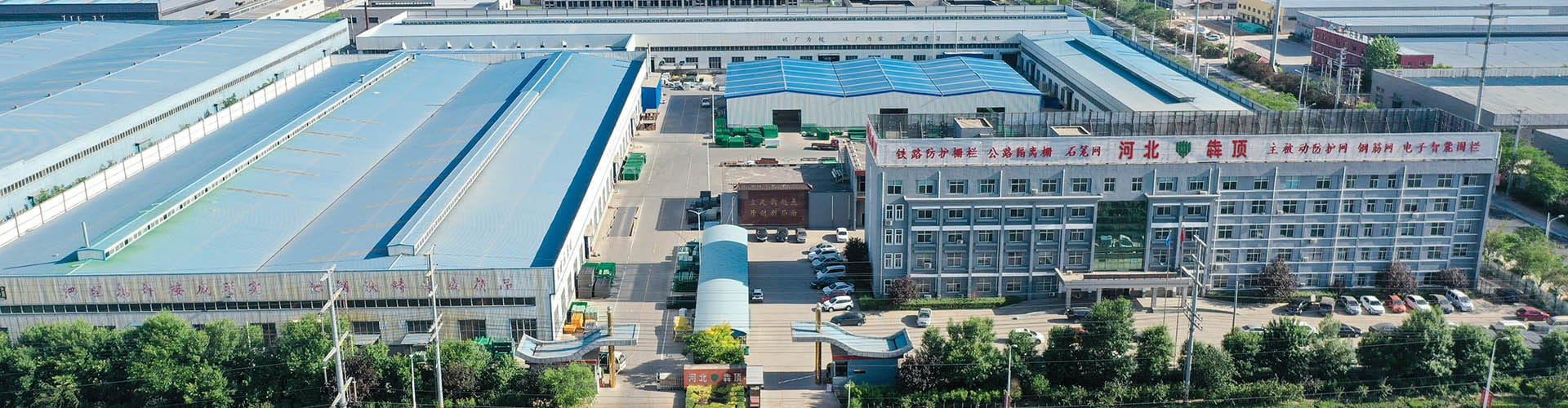
BDINDUSTRIAL helps logistics and automation operators pick suitable warehouse guarding fence that balances impact resistance, visibility and workflow access for mixed forklift, AGV and robotic operating zones. Many warehouse managers make the mistake of ordering one standard fence type for every area. Yet forklift travel lanes and robot work cells carry completely different risk profiles. A fence strong enough to withstand occasional pallet bumps may block sensor sightlines for AMRs, while a lightweight mesh panel designed for robot guarding can deform quickly when hit by a moving forklift. Knowing what to check before ordering saves you costly rework, unexpected downtime and safety compliance headaches later.
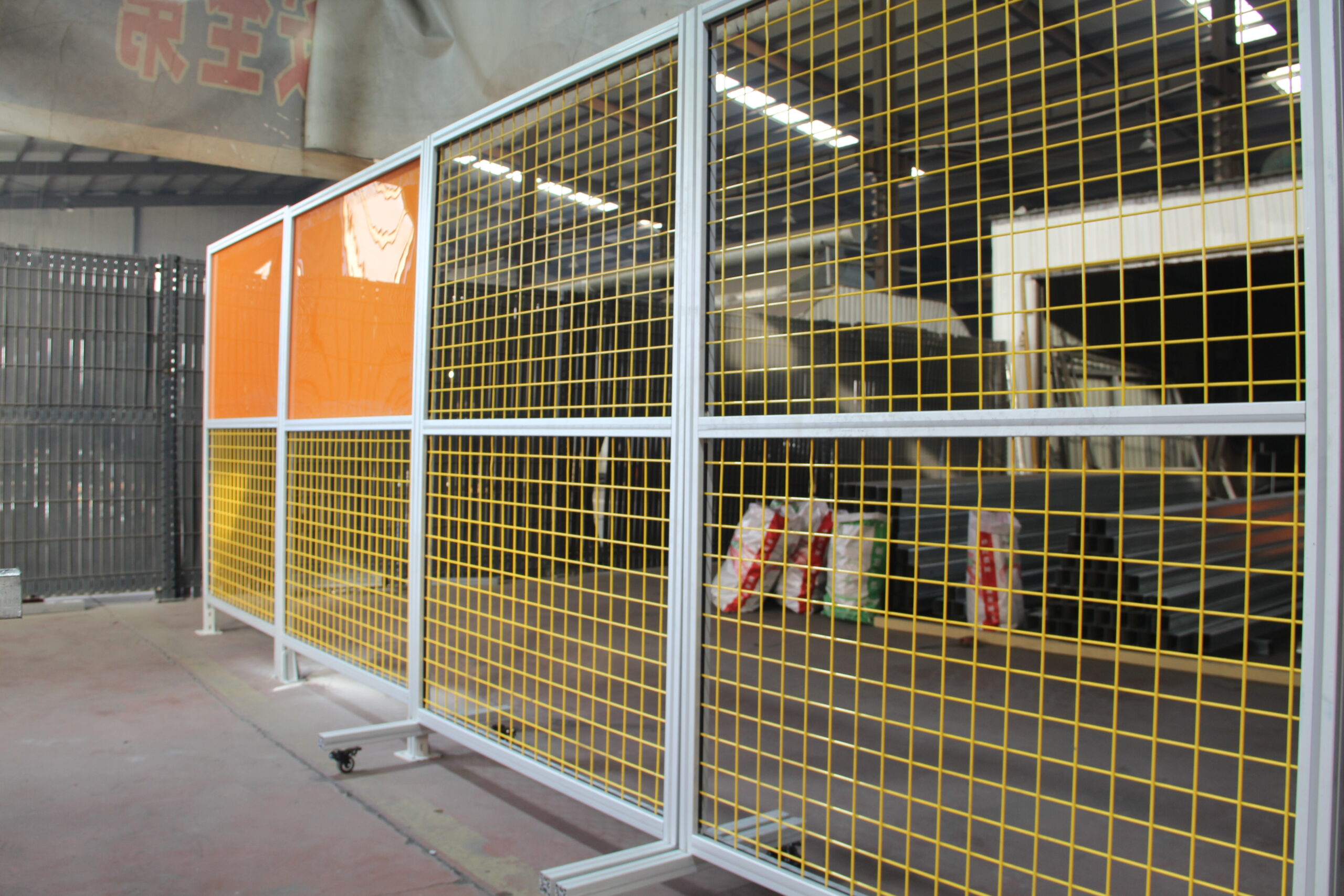
Understand the Risk Difference Between Forklift Zones and Robot Zones
Forklift zone risk features
Forklift areas face low-speed but heavy mass impacts. Pallet jacks, counterbalance forklifts and reach trucks often scrape or bump barriers during turning, loading and aisle passing. Guarding here needs solid anchoring and heavy posts, not just thin decorative mesh. The fence should stay intact after minor hits instead of collapsing and creating sharp hazards.
Robot and AGV zone risk features
Robot cells focus on preventing accidental human entry into automated paths. Most AGVs and pallet robots move at low speeds, but their laser scanners and navigation sensors need clear sightlines. Too-solid panels can block light or reflect signals and trigger false emergency stops. Visibility for maintenance checks is also critical for robot zones.
Pick the Right Panel Style Based on Your Operational Needs
Welded mesh panels for most robot and AGV
enclosures Standard welded mesh offers the best balance of visibility and hand-access prevention. Staff can check robot movements without opening gates, and laser navigation signals pass through smoothly. It works well around sorting robots, palletizing cells and fixed AGV loops.
Perforated panels for zones with debris or splash risks
If robots handle cutting, grinding or material spillage, perforated steel panels contain flying fragments. Keep the hole size large enough to maintain light transmission and avoid interfering with sensor performance.
Solid steel panels for high-impact forklift crossing points
Solid sections can be added at corners, dock approaches and tight aisle turns where forklift impact frequency is high. Avoid fully solid fencing for long robot perimeters unless sensor testing is completed on site.
Check Structural Specs for Impact Performance
Post thickness and base plate design make the biggest difference for forklift-facing sections. Heavy-duty 60×60 mm square posts with bolted floor base plates are recommended near forklift routes. Lighter 40×40 mm posts fit internal robot cells with no forklift exposure. Confirm wire diameter for mesh panels; 3 mm or thicker wire resists bending after repeated bumps. You also need to review post spacing. Wider spacing reduces anchor holes on concrete floors but lowers overall impact capacity.
Match Gate Type to Access Frequency
Single swing safety gates with lock latches work for robot cells that only open for scheduled maintenance. Sliding gates are better for forklift and pallet entry points, as they do not swing into traffic aisles. If you need interlock integration with robot safety circuits, select gate models that support safety switch installation. Never use simple hook latches for restricted robot zones where unauthorized entry can trigger equipment collisions.
Think About Future Layout Changes
Modern warehouses adjust racking, robot routes and picking zones every few months. Modular bolt-together guarding fence systems let you reposition panels, swap mesh sections and add new gates without cutting or welding fixed frames. This modular design delivers better long-term value than permanently welded barriers, especially for 3PL and e-commerce fulfillment centers that update workflows seasonally.
Verify Finish and Environment Suitability
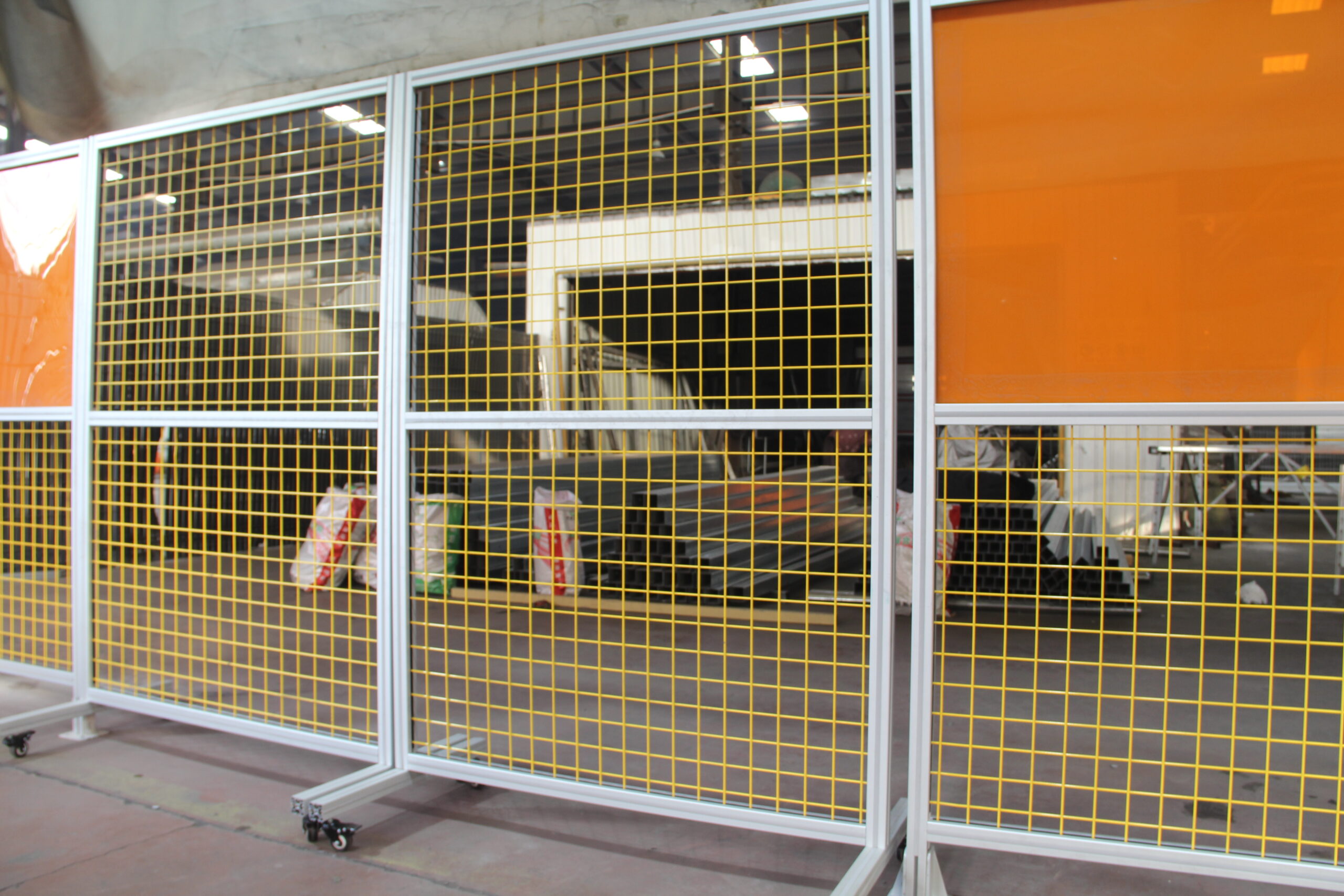
Powder-coated yellow remains the most popular choice for indoor warehouses, delivering high visibility against racking and concrete floors. Hot-dip galvanized finish is suitable for cold storage, humid loading areas or outdoor yard guarding. If your site uses washdown cleaning cycles, confirm the coating and fasteners can stand regular water exposure without rusting quickly.
Every warehouse layout is unique, and mixing forklift lanes with robotic automation requires a tailored guarding plan. BDINDUSTRIAL can review your site layout drawings, test zone risks and provide custom warehouse guarding fence layouts for forklift and robot zones. Reach out to BDINDUSTRIAL to get detailed specs, impact test data and project quotation for your warehouse safety upgrade.
FAQ
Can I use the same warehouse guarding fence for both forklift lanes and robot cells?
You can use the same modular post system, but panel specs must differ. Forklift-facing sections need heavier posts and reinforced base plates, while robot zones can use standard welded mesh panels optimized for visibility.
Will welded mesh fence interfere with AGV laser navigation?
Properly sized welded mesh usually does not disrupt laser scanners. Avoid dense, small-aperture mesh or reflective panel surfaces. If you are unsure, run a short navigation test after sample installation.
What height should warehouse guarding fence be for robot work cells?
Most robot guarding builds to 1200 mm or 1400 mm to stop operators from reaching over the top. Higher 1800 mm full-height fencing is required for zones where workers may climb over barriers.
Is bolted base installation better than chemical anchoring for forklift zones?
Bolted base plates offer more stable impact resistance and easier removal later. Chemical anchors can be used only if concrete strength meets requirements and impact load is low.
How much does modular warehouse guarding fence cost compared to fixed welded barriers?
Modular systems carry a slightly higher upfront cost, but they save money when you reconfigure zones. Fixed welded fence is cheaper at first but needs full replacement when workflows change.