


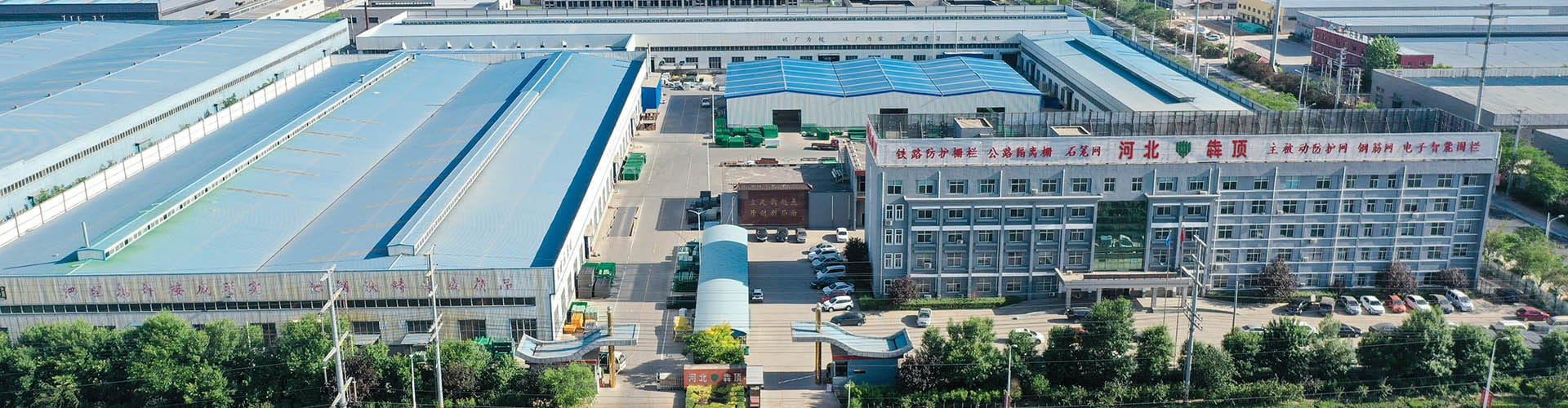
A warehouse guarding fence serves as the physical backbone of industrial site safety. It separates pedestrian traffic from forklift operations, blocks unauthorized access, protects valuable inventory, and keeps automated equipment running without external interference. While high-quality industrial fences from reliable manufacturers feature strong impact resistance and corrosion tolerance, long-term exposure to forklift collisions, industrial dust, humid air, and chemical residues will gradually wear down surface coatings and structural stability.
Without regular, targeted maintenance, even heavy-duty warehouse fences will develop loose joints, rust spots, bent panels and coating peeling over time. These minor issues slowly turn into major safety loopholes, triggering audit failures, on-site accident risks and costly early replacement. The good news is that simple, consistent maintenance routines can extend fence service life significantly and keep stable safety performance year-round. In this practical guide, BDINDUSTRIAL shares field-tested maintenance methods to help facility managers maximize their warehouse guarding fence investment.

Carry Out Scheduled Visual & Structural Inspections
Most fence failures do not happen suddenly. They develop from tiny, overlooked defects that worsen with daily operation. Regular inspections are the most cost-effective way to avoid structural deterioration and maintain long-term fence performance. Different warehouse environments require customized inspection cycles to match on-site wear intensity.
Adopt Tiered Inspection Cycles Based on Site Conditions
For standard indoor warehouses with dry, clean environments and moderate traffic, a monthly visual check and a quarterly detailed inspection are sufficient. For high-traffic forklift zones, humid storage areas, chemical factories and coastal warehouses with salt spray corrosion, weekly spot checks and bi-monthly full inspections are necessary. Any section that endures direct forklift impact or cargo extrusion needs immediate inspection after the incident, rather than waiting for scheduled checks.
Focus on Key Structural Wear Points
During inspections, prioritize high-risk components that bear the most pressure and friction. Check vertical posts for tilting or sinking, examine panel frames for bending and deformation, and verify all bolts, clamps and connectors for looseness or missing parts. Pay special attention to fence corners, passage gate connections and bottom base fixing points, as these areas bear the most structural stress and loosen first in daily operation.
Regular Cleaning to Eliminate Hidden Corrosion Triggers
Industrial warehouse fences easily accumulate floating dust, oil residues, packaging debris and moisture on the surface. Many facility managers ignore daily cleaning, assuming metal fences are corrosion-resistant enough. In fact, long-term stacked dirt and chemical residues will slowly erode galvanized and powder-coated layers, destroying the protective barrier and causing local rust and coating peeling.
Adopt Scientific Cleaning Methods for Industrial Fences
Daily maintenance only requires simple surface cleaning. Use soft cloths, soft-bristle brushes or low-pressure water flushing to remove dust and loose debris. For stubborn oil stains and adhered dirt, mix mild neutral detergent with warm water for gentle scrubbing. Never use strong acid or alkali cleaning agents, which will chemically react with the fence surface coating and accelerate aging and fading.
Adjust Cleaning Frequency for Harsh Environments
Standard indoor warehouses can complete thorough cleaning every 3 to 6 months. Industrial workshops with oil fume and chemical pollution, as well as coastal humid warehouses, need cleaning every 1 to 3 months to remove corrosive attachments. Keeping the fence surface clean and dry is the simplest and most effective way to delay corrosion and maintain long-term structural performance.
Timely Repair Local Damage & Micro Defects
Minor damage such as small coating scratches, slight bending and loose screws will not affect fence use in the short term. However, if left unprocessed, these tiny defects will expand rapidly. Scratched coating exposes bare metal to air and moisture, forming rust spots that spread outward. Slight structural deformation will gradually worsen under continuous equipment vibration and cargo impact, eventually leading to overall fence instability.
Fix Coating Scratches and Rust Spots in Time
Once surface coating peeling or local rust is found during inspections, timely repair is essential. Clean the rusted area thoroughly, polish the surface smooth, and apply matching anti-rust paint and topcoat to form a new protective layer. This simple repair can effectively block further oxidation and avoid large-area rusting and coating falling off, greatly extending the overall service life of the fence.
Correct Deformation and Fasten Loose Structures
For slightly bent mesh panels and frames, manual correction and reinforcement can restore vertical and flat status. Retighten all loose bolts and replace missing fasteners in a timely manner. For severely deformed and cracked components that cannot be repaired, replace individual sections immediately instead of continuing to use them, to avoid structural failure affecting the overall safety defense system.
Optimize On-Site Layout to Reduce Fence Wear
A large part of fence damage comes from unreasonable on-site layout and irregular operation habits, rather than product quality problems. Long-term improper use will cause continuous impact and extrusion on the fence, accelerating performance attenuation. Optimizing daily use rules can fundamentally reduce unnecessary wear and reduce subsequent maintenance pressure.
Remove Hidden Obstacles Around Fence Zones
Regularly clean up stacked pallets, idle equipment, packaging materials and sundries near the fence. Stacked items will squeeze the fence structure for a long time, and sundry accumulation will block ventilation, cause moisture retention and breed corrosion. In addition, stacked objects can be used as climbing aids, reducing the safety isolation performance of the fence.
Standardize Mechanical Operation Routes
Clarify fixed driving routes for forklifts and handling equipment to avoid frequent close-range collision and friction with the fence. Mark warning lines near high-frequency fence sections to remind operators to keep a safe distance. Standardized operation can greatly reduce accidental impact damage, maintaining the long-term stability of the fence structure.
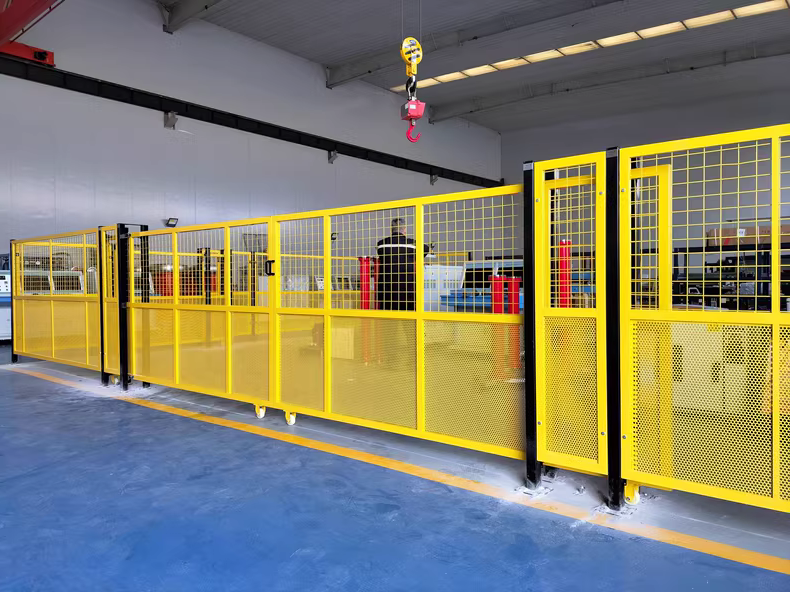
Seasonal Targeted Maintenance for Stable All-Weather Performance
Different seasons and weather changes bring different environmental erosion risks to warehouse fences. Humid rainy seasons, high-temperature summer environments and cold winter weather will all affect the protective coating and structural stability. Targeted seasonal maintenance can effectively avoid seasonal aging damage.
Humid & Rainy Season Anti-Corrosion Maintenance
In rainy and humid seasons, metal fences are prone to moisture erosion and electrochemical corrosion. Strengthen inspection frequency, focus on checking water accumulation and rust at welding points and the bottom of columns, and keep the fence and foundation dry. Timely repair damaged coating to prevent rainwater from penetrating and corroding the internal metal structure.
High-Temperature & Coastal Environment Protection
Long-term strong sunlight in summer will accelerate coating aging and fading. Coastal areas with high salt content in the air easily cause salt spray corrosion. For these scenarios, regular surface maintenance and supplementary anti-corrosion treatment are required to enhance the weather resistance of the fence and avoid premature performance degradation.
Professional Replacement & Upgrade for Aging Fence Systems
Even with perfect daily maintenance, warehouse guarding fences have a service life cycle. After years of high-frequency operation, overall aging problems such as general structural fatigue, large-area coating failure and component aging will appear. At this stage, simple partial maintenance can no longer guarantee safety performance, and professional overall evaluation and replacement are required.
When your fence appears continuous rust repair failure, frequent structural loosening, obvious overall tilting, or cannot meet the latest industrial safety audit standards, it is time for system upgrade. Replacing aging fences in advance can avoid sudden safety accidents and unplanned shutdown losses, ensuring long-term stable and compliant operation of the warehouse.
If you need professional warehouse guarding fence inspection, maintenance guidance, aging renovation and customized upgrade solutions, contact BDINDUSTRIAL. We provide free on-site safety evaluation, one-stop maintenance technical guidance and high-standard industrial fence customization services for global warehouse and industrial projects.
FAQ
1. How often should warehouse guarding fences be inspected and maintained?
The maintenance cycle depends on the on-site environment. Standard dry indoor warehouses require monthly visual inspection and quarterly detailed structural inspection. High-traffic forklift zones, humid workshops and coastal corrosive environments need weekly spot checks and bi-monthly full inspections. Timely inspection and minor repairs can effectively extend fence service life and maintain stable safety performance.
2. What is the main cause of early damage to industrial warehouse fences?
Most early fence failures are caused by neglected minor defects and irregular use. Long-term accumulation of dust and oil residues leads to coating corrosion, undiscovered loose bolts cause structural instability, and frequent forklift impacts cause panel deformation. These trivial problems accumulate and eventually lead to large-area damage and performance degradation, far more impactful than normal aging.
3. Can I use ordinary detergent to clean warehouse metal fences?
Yes, but only neutral mild detergent mixed with warm water is allowed. Strong acid and alkali cleaners will corrode the galvanized layer and powder-coated surface, causing coating peeling, fading and accelerated aging. For daily cleaning, soft brushes and low-pressure water flushing are the safest and most effective methods to protect the fence’s anti-corrosion layer.
4. Is partial rust repair effective for old warehouse fences?
Very effective for local minor rust and coating scratches. Timely polishing, rust removal and anti-rust paint repair can block the spread of oxidation, avoiding large-area rusting and structural damage. However, for fences with overall aging, widespread rust and structural fatigue, partial repair is no longer sufficient, and overall replacement and upgrade are recommended.
5. How many years can a well-maintained warehouse guarding fence last?
With scientific daily maintenance and standardized use, high-quality industrial fences from BDINDUSTRIAL can maintain stable safety performance for more than 10 to 15 years. Good maintenance avoids premature aging, structural deformation and corrosion failure, greatly reducing long-term replacement and secondary investment costs for enterprise warehouse safety facilities.