


What Is a Robot Fence?
Standard Robot Fence Specifications
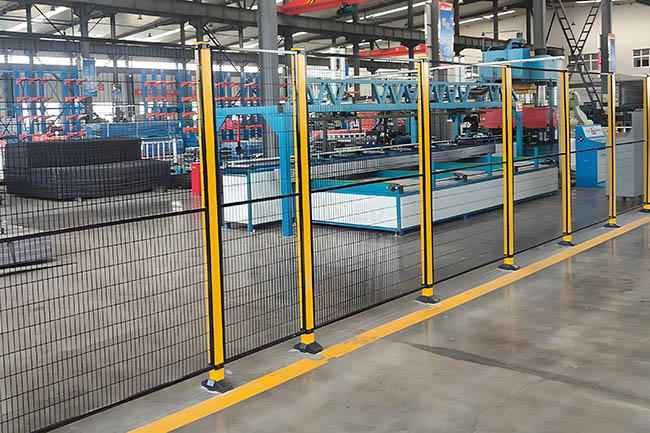
- Mesh Opening: 50×50mm, 50×100mm anti-pinch grid
- Wire Diameter: 3.0mm–6.0mm (4mm standard, 5–6mm for heavy payload robot cells)
- Panel Height: 1800mm, 2000mm, 2200mm, 2500mm (2000mm is most common standard height)
- Single Panel Width: 2000mm, 2500mm, 3000mm
- Frame Border: 20×40mm / 30×50mm thick Q235 rectangular steel tube
- Support Post: 60×80mm / 80×80mm rectangular steel tube, wall thickness 2.0–3.0mm
- Post Spacing: Standard 2.0m–2.5m; high-speed robot zones adjusted to 1.5m
- Surface Treatment: Hot-dip galvanized or PVC powder coated
- Structure: Full welded integral mesh panel, modular bolt assembly, reserved cutouts for safety light curtains
Core Advantages of Robot Safety Fence
- Reliable Physical Isolation & Operator Safety
Thickened rigid mesh and frames block accidental robot arm overtravel impacts, preventing collision injuries to staff. It forms a clear safety boundary to stop unauthorized access to high-speed robotic working areas.
- High Impact & Deformation Resistance
Heavy-gauge steel wire and full solid welding deliver strong structural tension. The fence remains intact without bending or breaking under low-to-medium robot arm bumps, far sturdier than thin ordinary isolation nets.
- Corrosion & Workshop Environment Resistant
Galvanized and powder-coated layers resist rust, welding fume, oil mist and workshop humidity. It maintains stable performance for long-term 24-hour continuous automated production.
- Clear Visibility for Production Monitoring
Uniform mesh openings retain good transparency. Supervisors can observe robot running status, assembly quality and equipment operation without opening safety doors.
- Long Lifespan & Minimal Routine Maintenance
Premium robot fences serve 10–20 years indoors under normal automation production conditions. No frequent repainting or part replacement is needed, cutting long-term factory maintenance expenses.
- Flexible Customization & Automation Accessory Matching
Modular panel and post design enables quick on-site assembly and layout adjustment when production lines upgrade. Customizable options include interlock safety doors, light curtain cutouts, emergency stop brackets, warning signs and lockable access gates for different robot payload and speed grades.
Main Applications
- Robotic Welding Workshops: Automotive frame welding, hardware robotic soldering cells
- Automated Assembly Lines: Electronic component assembly, household appliance fitting robots
- CNC Loading & Unloading Zones: Machine tool robotic handling and material feeding stations
- Packaging & Palletizing Plants: Stacking robot, box packaging robot isolation areas
- Heavy Machinery Manufacturing: Large component handling, forging robotic work cells
Two Main Robot Fence Surface Treatment Types
- Hot-Dip Galvanized Finish
Thick zinc layer provides powerful anti-rust performance. It is the cost-effective choice for humid welding workshops, metal processing plants and long-term fixed robotic production layouts.
- PVC Powder Coated Finish
Coated on a galvanized steel base with standard safety colors (warning yellow, industrial gray, blue). The smooth scratch-resistant coating improves workshop tidiness, widely used for electronics, food packaging and standardized lean automation factories.
Quick Buying Guide for Quality Robot Fence
- Full, continuous firm welding with no cold welds, missing joints or sharp burrs
- Compliant heavy wire diameter and thick frame tube wall thickness for impact resistance
- Uniform, bubble-free coating or zinc layer with no exposed bare steel substrate
- Manufacturer with professional robotic cell layout and machine safety engineering experience
- Complete matching safety accessory supply (interlock hinges, light curtain brackets, safety door locks)
FAQs
Q1: What is the difference between robot fence and regular workshop isolation fence?
A1: Ordinary partition fences are thin and only for light zone division; robot fence adopts thickened impact-resistant frames and mesh, matched with safety interlock door systems, specially designed to withstand robot collisions and meet strict human-machine safety standards.
Q2: Can robot fence stop heavy payload robot impacts?
A2: Standard fences fit small/medium payload robots (≤500kg); for heavy payload robots, select 5–6mm thick wire and 3.0mm wall thickness posts to upgrade impact resistance.
Q3: What is the service lifespan?
A3: High-quality galvanized or powder-coated robot fences maintain stable safety performance for 10–20 years in indoor automated workshops with simple cleaning maintenance.
Q4: Can safety light curtains and sensors be installed on the fence?
A4: Yes. Manufacturers can pre-cut precise openings and install reserved mounting brackets for light curtains, detection sensors and wiring channels without weakening frame structural strength.