


Choosing the wrong warehouse guarding fence can lead to safety gaps, failed audits and frequent rework, and BDINDUSTRIAL helps warehouse managers sort through panel styles, safety standards and site requirements to pick guarding that fits operation needs instead of overspending on unnecessary features. Many buyers only compare price per meter, ignoring mesh size, standoff distance and coating quality, which are the details that decide whether the fence works for forklift lanes, robot cells or restricted storage areas. This practical buying guide walks you through every key step before you place an order.

Define your warehouse risk zones and guarding goals
Before checking panels or quotes, map out exactly what you need to separate. Different zones carry different hazards, and one universal fence style rarely works well across an entire facility.
Forklift and pedestrian separation zones
These areas need rigid frames with moderate impact resistance. Visibility is critical so drivers and workers can spot each other early. Avoid fully solid panels that create blind corners.
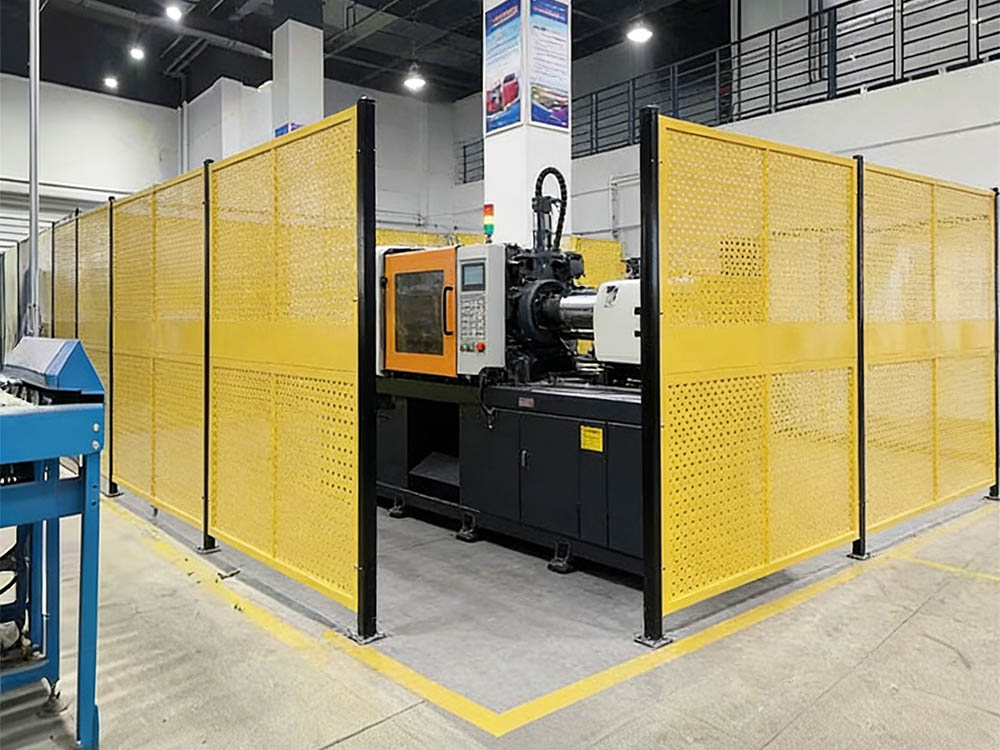
Robot, AGV and automated machine cells
Machine guarding must follow ISO 13857 reach distance rules. Mesh openings have to stop hand penetration, and gate frames should support safety interlock switches that pause equipment when opened.
Restricted inventory and tool storage cages
Security is the main priority here. Anti-climb mesh, lockable gates and tamper-resistant fasteners help control access and reduce stock loss or tool misplacement.
Compare common warehouse guarding fence panel types
Manufacturers offer several mainstream panel designs, each with clear pros and cons for warehouse use. Knowing the difference keeps you from picking a style that conflicts with your workflow.
All welded wire mesh fence
The most widely used option for general warehouse zoning. It balances visibility, airflow and cost, available in multiple mesh sizes for hand-reach protection. It is easy to modify and reuse when layouts change.
Perforated metal safety fence
Perforated steel panels deliver better rigidity than fine mesh, with less chance of wire bending after light impacts. It works well for dust-heavy zones where fine mesh traps debris.
Color acrylic / clear solid panel fence
Best for cleanrooms, electronics assembly and show-line areas. Acrylic keeps full visibility, wipes clean easily, but it is not built to withstand heavy forklift collisions.
Check critical specifications and safety compliance
Specifications are not just marketing numbers. Wrong dimensions will get flagged during safety audits and create hidden injury risks.
Mesh opening, fence height and safe standoff distance
Mesh size is chosen to stop fingers or hands reaching through. Fence height and horizontal distance from the hazard must match ISO 13857 to prevent reaching over the top. Many low-cost suppliers skip this calculation.
Surface coating and corrosion resistance
Hot-dip galvanized or polyester powder coating are the two reliable choices. Galvanized suits damp, cold or refrigerated warehouses, while powder coating gives you custom color coding for zone management.
Post thickness, base plate and anchoring method
Thicker posts and reinforced base plates reduce deflection when leaned or bumped. Surface-mounted base plates are popular for existing concrete floors, while floor socket mounting offers a cleaner look for new builds.
Plan gate styles and site accessories
A fence run is only functional if access points match your workflow. Poor gate design creates shortcuts that defeat the whole guarding system.
Swing gate, sliding gate and emergency exit options
Swing gates work for narrow maintenance access. Sliding gates are ideal for pallet or trolley entry. Emergency gates need quick-release latches and clear exit marking.
Safety interlocks, locks and warning labels
Robot cell gates often require interlock hardware. Inventory cages use key or card locks. Standardized warning labels help new temporary staff and contractors understand zone boundaries quickly.
Evaluate installation, budget and long-term value
Smart buyers calculate total ownership cost, not just the upfront price of panels. Cheap lightweight fencing often bends and needs replacement within a couple of years.
Modular vs fixed welded construction
Modular bolted systems are the standard for modern warehouses. They ship prefabricated, install without on-site welding, and can be disassembled and relocated when racking or AGV routes change.
Budget allocation tips
Reserve heavier-duty reinforced sections for high-traffic forklift edges. Use standard mesh for low-risk storage partitions. This method keeps safety intact while controlling spending.
Delivery timeline and after-sales support
Confirm lead time, packing and site technical support. A supplier that can provide layout drawings and installation guidance helps avoid costly mistakes on-site.
If you are ready to finalize your warehouse guarding fence plan or need layout drawings tailored for forklift aisles, AMR robot zones and secure storage cages, contact BDINDUSTRIAL. Our team can review your warehouse risk assessment and recommend suitable panel styles, gate configurations and safety-compliant dimensions for your facility.
FAQ
What is the standard height for warehouse guarding fence?
There is no universal fixed height. Most robot and machine guarding uses 1200 mm to 1400 mm panels, while high-security inventory cages often go up to 1800 mm or higher. The final height and standoff distance should follow ISO 13857 based on your hazard assessment.
Which warehouse guarding fence type is best for forklift aisles?
Heavy-duty welded wire mesh with thick steel posts and reinforced base plates is the most practical choice. Acrylic panels are not recommended for direct forklift impact zones, as they can crack under heavy contact.
Can I install warehouse guarding fence by myself without professional help?
Modular bolted systems are designed for simple assembly, but you still need accurate site measurements and proper anchoring. If you are building guarding around automated robots, we suggest working with a technical supplier to verify safety distances and interlock compatibility.
How long does powder-coated warehouse guarding fence last?
With normal indoor warehouse use, good powder-coated fencing can last 8–12 years. Service life drops faster in humid, washdown or coastal environments; hot-dip galvanized options are more suitable for these harsh conditions.
Does warehouse guarding fence meet OSHA and CE safety requirements automatically?
Not automatically. The product itself must be built to the right specs, and the installation layout including mesh opening, height and safe distance from hazards needs to align with relevant standards. BDINDUSTRIAL can supply documentation for safety audit support.