


Most warehouse fence quality issues do not show up during delivery. They appear months after installation: loose welds, fading coating, panel deformation, unstable posts, and even failure to pass safety audits. For warehouse managers, contractors and industrial procurement buyers, picking low-quality guarding fences leads to repeated replacement, extra maintenance costs and hidden onsite safety risks.
Many buyers only compare prices and basic sizes when sourcing warehouse guarding fences, ignoring core quality control standards and factory inspection details. This blind purchasing method easily causes inconsistent product quality and unqualified engineering results. With rich industrial fence manufacturing and project delivery experience, BDINDUSTRIAL sorts out the most practical and onsite-verifiable quality control key points. This guide helps buyers complete professional quality inspection before ordering, during production and after delivery, avoiding inferior products and ensuring long-term stable operation of warehouse safety facilities.
Verify Raw Material Quality & Steel Grade Compliance
Raw material quality determines the ultimate service life and structural strength of warehouse guarding fences. Many low-cost products use recycled steel or substandard thin raw materials, which look the same as qualified products on the surface but deform and rust easily in daily forklift collision and long-term environmental erosion.
Confirm steel grade and plate thickness tolerance
Qualified industrial warehouse fences must adopt standard national and international Q235B carbon steel materials with stable mechanical properties. Buyers need to clearly verify the actual thickness of panels, posts and wire diameters, instead of only referring to nominal parameters. Inferior products usually have obvious thickness tolerance deviation, thin pipe walls and insufficient bearing capacity. It is necessary to require suppliers to provide raw material factory certificates and material inspection reports to ensure no recycled materials are mixed in production.
Check raw material surface flatness and uniformity
High-quality steel raw materials have flat surfaces, uniform texture, no pitting, rust spots and rolling cracks. Poor raw materials often have uneven surfaces and partial oxidation spots. These hidden defects will expand after welding and surface treatment, causing local coating peeling and accelerated corrosion in later use.
Inspect Welding Craft & Structural Stability Standards
Welding quality is the core of warehouse fence structural stability. Unstandardized welding is the main cause of panel fracture, weld cracking and overall deformation. Manual welding and semi-automatic welding production lines often have unstable welding quality, while standardized full-automatic welding processes ensure consistent welding accuracy of each product.
Weld seam uniformity and full penetration inspection
Qualified fence welding requires full penetration of all welding points, smooth and uniform weld seams without gaps, pores and welding spatter. The welding interface is closely fitted without virtual welding and missing welding. Buyers can randomly inspect finished products to check for uneven weld beads and false welding phenomena. Substandard welding points will break under slight forklift vibration and impact, bringing safety hazards.
Panel geometric tolerance and flatness detection
Standard warehouse guarding fence panels need to maintain strict geometric squareness and overall flatness. The diagonal error of each panel must be controlled within a small tolerance range to avoid uneven installation and large assembly gaps. Unqualified products are prone to bending, warping and irregular sizes, which will lead to difficult on-site installation, poor overall flatness and affected zoning aesthetics.
Reinforced structure and anti-deformation design verification
For high-frequency operation warehouse scenarios, fence panels need professional reinforced structure design. Buyers should confirm whether the panel edges and welding joints have reinforcement measures to enhance overall rigidity. Ordinary thin and unreinforced panels are easy to sag and deform after long-term use, failing to meet industrial safety protection standards.
Check Surface Treatment & Anti-Corrosion Performance
Surface treatment directly determines the weather resistance, anti-rust ability and service life of warehouse fences. Most outdoor and semi-outdoor warehouse fence failures are caused by unqualified coating processes, leading to rapid fading, peeling and rusting.
Coating thickness and uniformity inspection
Professional electrostatic spraying or hot-dip galvanizing processes have clear coating thickness standards. Buyers can use a professional coating thickness gauge to spot-check finished products to ensure uniform coating thickness without local thin coating or missing coating. Uneven coating will cause partial rusting in advance and greatly shorten the service cycle of the fence.
Surface appearance and defect inspection
Qualified finished fences have smooth and flat surfaces, uniform color, no particle protrusions, bubbles, cracks and peeling marks. The edges are smooth without burrs to avoid scratching staff and equipment during use. Inferior products have rough surfaces, color difference and obvious process defects, which affect both appearance and practical safety.
Anti-corrosion and salt spray resistance certification verification
For humid warehouses, coastal warehouses and outdoor open-air storage areas, buyers need to verify the supplier’s salt spray test reports and anti-corrosion certification documents. Standard anti-corrosion processes can resist long-term wind, rain and humid erosion, ensuring stable fence performance for many years without rusting.
Verify Accessory Matching & Installation Adaptability
Many buyers only pay attention to fence panel quality and ignore supporting accessories. In fact, unqualified posts, bases and connectors will lead to unstable overall installation, loose assembly and reduced anti-collision performance, even if the panels meet standards.
Support post specification and material consistency
The fence support posts must adopt the same standard steel grade and surface treatment as the panels to ensure consistent overall stress and anti-corrosion performance. It is necessary to check the post pipe thickness, height specification and base plate size to avoid thin posts and undersized base plates that cause unstable support and easy toppling.
Connector precision and assembly tightness
Standardized accessories such as bolts, clips and connecting parts need precise size matching. Qualified accessories are tightly assembled without shaking and displacement after installation. Inferior accessories have large tolerance errors, resulting in loose connection, overall fence shaking and poor anti-vibration ability during equipment operation.
On-site adaptability and modular tolerance inspection
High-quality modular warehouse fences have strong on-site adaptability, supporting flexible splicing and adjustment according to warehouse aisle corners and irregular layouts. Buyers need to confirm whether the product modular tolerance is reasonable to avoid assembly obstacles and forced cutting during on-site construction.
Confirm Factory QC System & Compliance Certification
Complete quality control system and standardized certification are the fundamental guarantee of stable product quality. Regular manufacturers have strict production inspection processes and complete qualification documents, while small factories lack standardized QC links and cannot guarantee batch product consistency.
Batch production inspection and record integrity
Buyers should require suppliers to provide batch production inspection records, including raw material inspection, welding process inspection, finished product size detection and surface quality inspection reports. Complete inspection records can effectively avoid batch defective products and ensure stable quality of each batch of goods.
International standard compliance certification
Qualified industrial warehouse fences need to meet ISO 9001 quality system certification, ASTM and EN industrial safety standards, and have third-party test reports. For export projects and high-standard factory renovation projects, complete compliance certificates ensure smooth project acceptance and safety audit passing.
BDINDUSTRIAL Strict Warehouse Fence Quality Control System
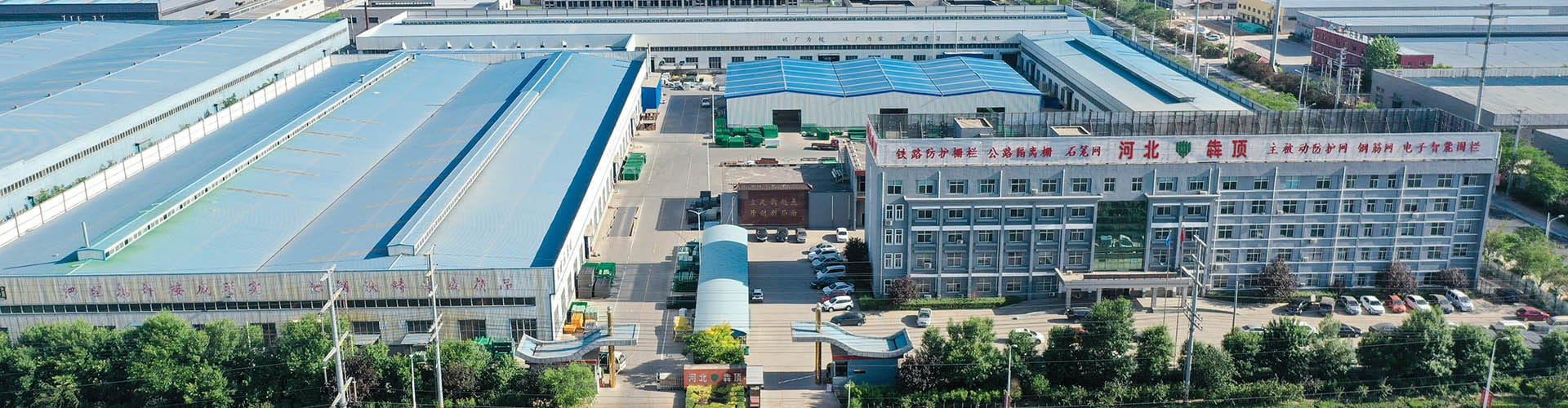
BDINDUSTRIAL always takes strict quality control as the core of product delivery. From raw material incoming inspection, full-automatic welding production, surface process treatment to finished product delivery inspection, we implement full-process multi-layer QC detection. All products adopt standard steel raw materials, precise welding processes and high weather-resistant surface treatment, with stable structural strength and excellent anti-corrosion performance.
We provide complete material certificates, test reports and compliance certification documents for each project, supporting buyer’s full quality verification. Strict factory tolerance control and standardized accessory matching ensure zero defective delivery and long-term stable operation of on-site warehouse guarding systems.
If you need professional warehouse guarding fence quality inspection guidance, customized high-standard fence products and one-stop project solutions, contact BDINDUSTRIAL. Our technical team provides free quality parameter verification, product sample confirmation and project technical docking services to help you purchase cost-effective and fully compliant industrial fence products.
FAQ
1. What is the most important quality control point for warehouse guarding fences?
Raw material steel grade and welding quality are the most critical control points. Qualified standard steel ensures structural anti-collision strength, while full-penetration uniform welding guarantees long-term structural stability. These two details determine the service life and safety performance of the fence, far more important than superficial appearance and low price.
2. How to quickly distinguish high-quality warehouse fence from inferior products?
Buyers can quickly judge through three intuitive details: smooth and uniform weld seams without spatter and virtual welding, flat and burr-free overall panel with standard geometric tolerance, and uniform coating without peeling and color difference. Inferior products usually have rough welds, deformed panels and uneven surface coating.
3. Why do many warehouse fences rust quickly after installation?
The main reasons are unqualified surface treatment process and substandard raw materials. Low-cost products adopt thin coating, uneven spraying or inferior galvanizing process, which cannot resist daily humid environment and dust erosion. In addition, mixed recycled steel materials are prone to oxidative rusting in a short time.
4. Do fence accessories affect the overall quality of the guarding system?
Absolutely yes. Unqualified posts, base plates and connectors will cause loose assembly, unstable support and overall fence shaking even if the panels meet standards. Matching standard accessories with consistent material and process is the key to ensure the overall anti-collision performance and structural firmness of the warehouse fence.
5. Can BDINDUSTRIAL provide quality inspection reports and certification documents?
Yes. BDINDUSTRIAL provides complete supporting documents for all warehouse guarding fence products, including raw material certificates, welding quality inspection reports, coating thickness test reports, salt spray test reports and international compliance certifications, supporting full quality verification and project acceptance.