


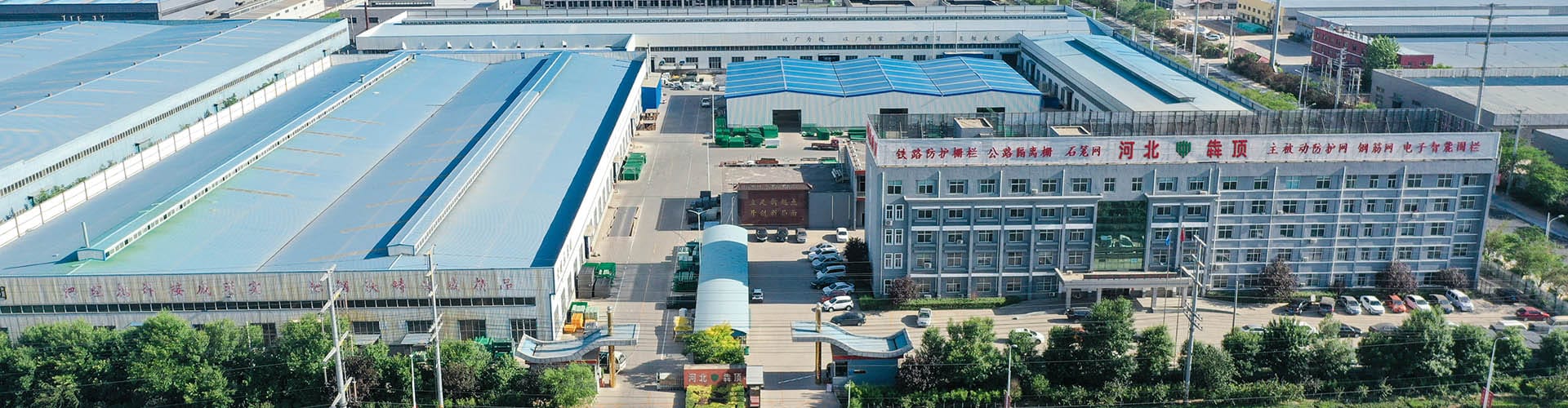
A production workshop rarely has only one safety requirement. Some areas need strong physical separation around machinery, while others require better visibility and a more open appearance. In this engineering project, BDINDUSTRIAL Welded & Perforated Type Workshop Fence was selected to solve both requirements within the same factory.
Instead of using one fence design throughout the entire facility, the project combined welded panels with perforated panels according to the function of each area. This approach allowed the customer to create clear boundaries while maintaining visibility and a consistent industrial appearance.
Project Background
One Factory, Different Working Areas
The customer operates a modern manufacturing facility with production equipment, material handling areas, worker passages, and technical zones.
During the workshop planning stage, several areas needed to be separated. However, the customer did not want every section to use the same type of barrier.
The main requirements were:
- Separate machinery from pedestrian areas
- Restrict access to selected production zones
- Maintain visibility around equipment
- Create a neat and consistent workshop layout
- Allow convenient access for maintenance
- Use a modular fence system for future adjustments
After reviewing the application, BDINDUSTRIAL recommended combining Welded & Perforated Type Workshop Fence panels.
Why Combine Welded and Perforated Panels?
Welded Panels for Strong Separation
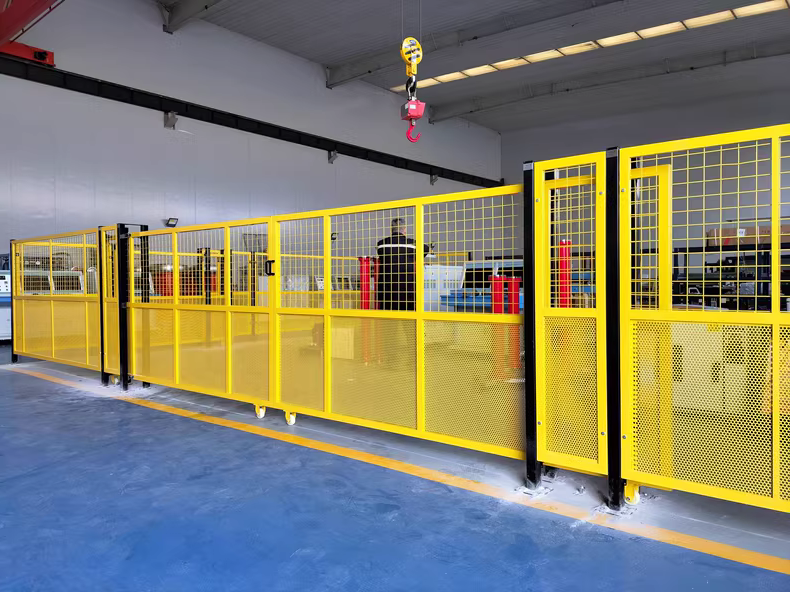
Welded fence panels were installed around areas where a more rigid physical barrier was required.
The welded structure provided a stable enclosure around selected machinery and production equipment while still allowing operators to observe activity through the open panel design.
Perforated Panels for a Different Level of Visibility
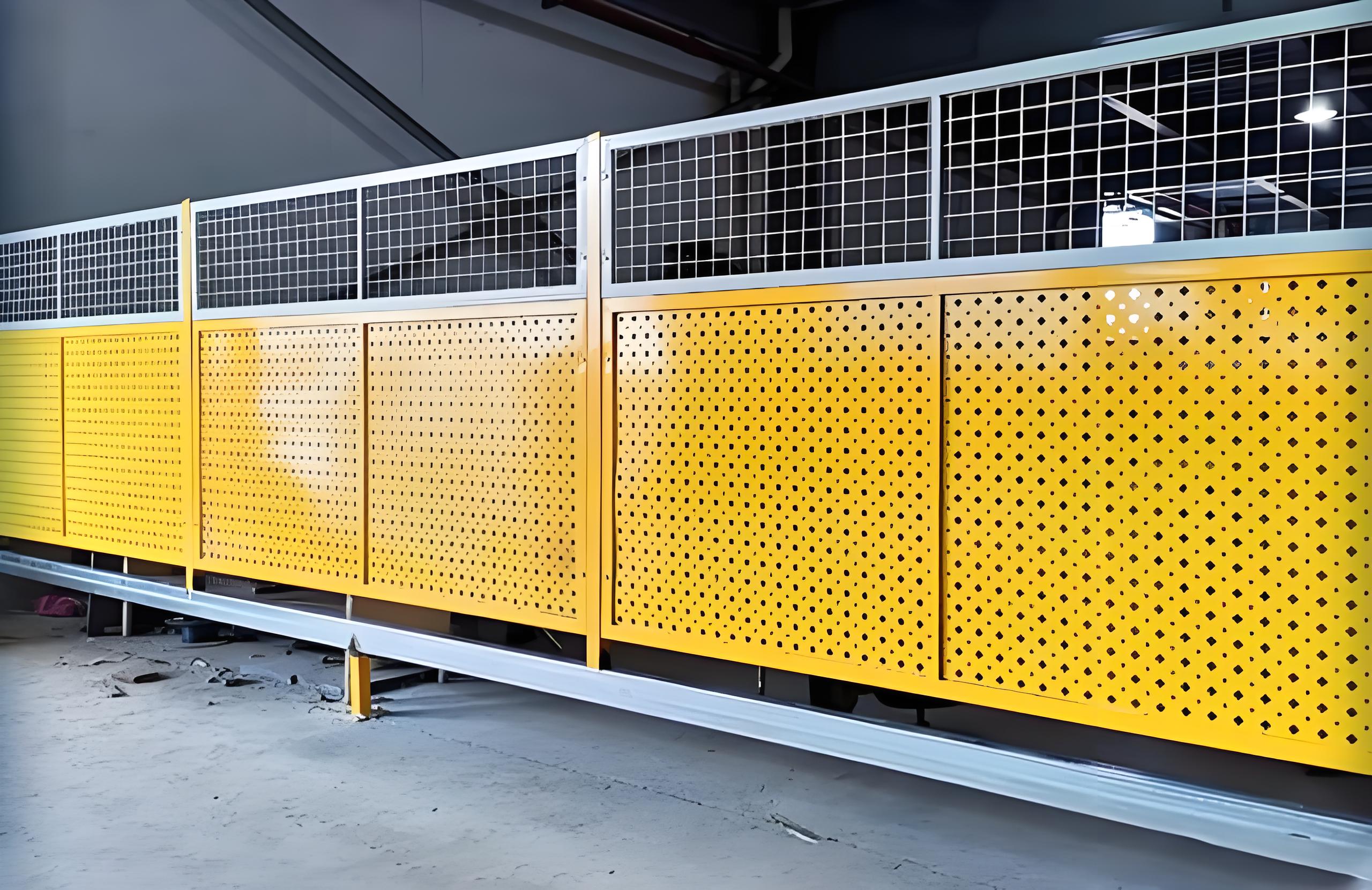
Perforated panels were used in areas where the customer wanted a more enclosed visual effect without completely closing the space.
The perforated surface created a distinctive appearance while maintaining ventilation and a degree of visibility.
One System, Multiple Applications
Combining two panel styles allowed the customer to use the right configuration in different areas instead of forcing one product to meet every requirement.
This also helped maintain a unified appearance throughout the workshop.
Project Design Process
Workshop Layout Review
Before production, the workshop layout was reviewed to identify machinery positions, pedestrian routes, access points, and areas requiring restricted entry.
The fence routes were planned around the existing production arrangement to avoid unnecessary interference with equipment and daily operations.
Panel Configuration
Different panel types were assigned according to the function of each area.
Welded panels were used where physical separation and open visibility were important, while perforated panels were selected for areas requiring a different balance between separation and visual coverage.
Access Door Planning
Access points were incorporated into the fence layout for operators and maintenance personnel.
The door positions were planned according to the workflow inside the workshop, helping prevent unnecessary movement through restricted areas.
Manufacturing the Workshop Fence
Material Processing
Materials were prepared according to the confirmed project specifications, including panel dimensions, supporting structures, and required surface finish.
Keeping the specifications consistent across the different panel styles helped the finished fence system maintain a coordinated appearance.
Welded Panel Production
The welded sections were fabricated according to the required dimensions. Welding created rigid panel structures that could be connected to the supporting posts during installation.
Perforated Panel Production
For the perforated sections, metal sheets were processed with regularly arranged openings according to the specified design.
The perforated construction provided a different visual effect while maintaining the required physical separation.
Surface Finishing
The surface treatment was selected according to the customer’s application and environmental requirements.
A suitable finish can help protect the metal components during everyday industrial use while keeping the fence visually consistent.
Installation at the Project Site
Installing the Supporting Posts
The installation team first positioned the supporting posts according to the approved layout.
Accurate spacing was important because both welded and perforated panels needed to align correctly with the supporting structure.
Connecting the Panels
The panels were installed section by section along the planned fence routes.
The modular design made it possible to install different panel configurations within the same overall fence system.
Installing Doors and Accessories
Doors and related components were installed at the designated access points. After assembly, the team checked the alignment and connection of the fence sections.
Results of the Project
Clearer Safety Boundaries
The completed fence system created clear boundaries around machinery and selected production areas.
Workers could easily distinguish between general working zones and areas requiring controlled access.
Better Visibility Around Equipment
The welded sections maintained an open view of protected machinery, which was useful for routine observation and supervision.
More Controlled Visual Environment
The perforated panels provided a different level of visual separation, helping the customer create a more controlled appearance in selected areas.
Flexible Workshop Layout
Because the fence was constructed as a modular system, the customer retained the possibility of modifying or extending individual sections when the production layout changes.
Where Welded & Perforated Workshop Fence Can Be Used
Manufacturing Facilities
The combination can be used to divide machinery areas, production lines, inspection zones, and worker passages.
Automation Workshops
Welded panels can provide open visibility around automated equipment, while perforated sections can be used in selected areas where additional visual separation is preferred.
Warehouses
The system can separate equipment areas, restricted storage sections, loading zones, and pedestrian routes.
Maintenance Areas
Workshop fences can create dedicated maintenance spaces without constructing permanent walls.
Why This Engineering Case Matters
A workshop fence should be selected according to the actual environment rather than simply choosing the most common product.
This project demonstrated the value of combining Welded & Perforated Type Workshop Fence within one facility. The customer was able to use welded construction where open visibility and rigid separation were priorities, while perforated panels were used where a different visual and functional requirement existed.
The result was a practical safety partition system that matched the factory’s working layout instead of treating the entire workshop as one uniform space.
BDINDUSTRIAL Welded & Perforated Type Workshop Fence Solution
BDINDUSTRIAL provides customized workshop fence solutions for manufacturing plants, warehouses, automation facilities, production lines, machine areas, and other industrial environments.
Our product range can be adapted to different project requirements, including panel style, dimensions, fence height, access doors, surface treatment, and accessories.
If you are planning a new workshop safety project or upgrading an existing factory layout, contact BDINDUSTRIAL with your drawings, dimensions, application details, and required quantity. Our team can help you develop a suitable Welded & Perforated Type Workshop Fence solution for your project.
FAQ
1. What is a Welded & Perforated Type Workshop Fence?
It is a workshop safety fence system that combines welded panels and perforated metal panels. Different panel types can be used in different areas according to visibility, separation, appearance, and application requirements.
2. Why use both welded and perforated panels in one workshop?
Different areas may have different requirements. Welded panels can provide rigid separation with open visibility, while perforated panels can offer a more enclosed visual effect while maintaining ventilation.
3. Can BDINDUSTRIAL customize the fence for a specific factory layout?
Yes. BDINDUSTRIAL can work according to project drawings and customize panel dimensions, fence height, materials, surface treatment, doors, posts, and other accessories.
4. Where can Welded & Perforated Workshop Fence be used?
It can be used in manufacturing plants, machinery areas, production lines, automation workshops, warehouses, maintenance areas, logistics facilities, and other industrial environments.
5. How can I request a quotation from BDINDUSTRIAL?
Send your project drawings, fence dimensions, preferred panel type, quantity, application environment, surface treatment requirements, and delivery information to BDINDUSTRIAL. The project can then be reviewed for a suitable customized solution.