


Most factory managers face a common dilemma when renovating workshop zoning. Traditional solid panel fences deliver strong isolation but block air flow and natural light, making indoor workshops stuffy and dim. Standard mesh fences are breathable and transparent, yet they cannot block fine dust, welding sparks and tiny processing debris, failing the refined management requirements of precision workshops. For modern manufacturing plants that require both safety isolation and comfortable working environments, welded and perforated type workshop fences have become the most balanced solution.
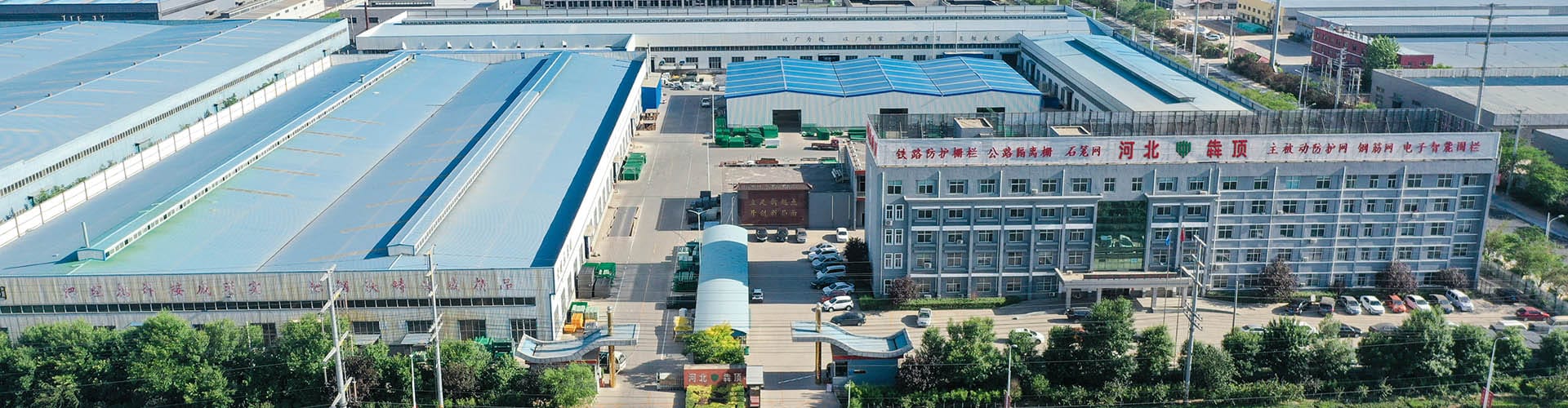
BDINDUSTRIAL, as an experienced industrial fence manufacturer in China, has long focused on the R&D and customized production of welded & perforated workshop fences. Different from ordinary spliced perforated barriers, our products adopt full welded integral forming technology with uniform hole spacing and smooth panel surfaces. They perfectly combine high structural stability, effective ventilation, light transmission and dust isolation. We have completed numerous successful engineering cases for mechanical processing workshops, electronic assembly plants and automated production factories. The following real projects show the practical application effects and unique advantages of our welded and perforated workshop fences in complex industrial scenarios.
Common Shortcomings of Traditional Workshop Isolation Fences
Solid Panels Cause Poor Ventilation and Dim Lighting
Fully enclosed solid fences completely isolate air circulation inside and outside the working area. For workshops with continuous equipment operation, accumulated heat cannot dissipate timely, resulting in high indoor temperature and stuffy working conditions. Meanwhile, blocked natural light increases lighting power consumption and creates a depressing working atmosphere, indirectly affecting staff work efficiency and production output.
Ordinary Mesh Fences Fail to Block Fine Debris and Dust
Standard mesh fences feature large and irregular gaps. Although they guarantee ventilation and visibility, they cannot block fine iron filings, grinding dust and welding spatter generated during mechanical processing. Cross-diffusion of pollutants between different functional areas easily affects product precision and workshop cleanliness, unable to meet the production standards of high-precision and dust-free workshops.
Spliced Structures Lead to Unstable Long-Term Use
Most ordinary perforated fences adopt bolt splicing assembly. Under long-term equipment vibration and frequent on-site collision, connecting bolts are prone to loosening, causing panel shaking and displacement. Irregular gaps will appear over time, damaging the overall zoning neatness and reducing the safety isolation performance of the fence.
BDINDUSTRIAL Welded & Perforated Workshop Fence Real Engineering Cases
Mechanical Processing Workshop Dust Isolation Renovation Project
A medium-sized mechanical processing factory has multiple grinding and polishing working areas. The original common mesh fences could not block fine metal dust, causing dust to spread to the finished product storage area and assembly area. This situation contaminated finished parts, increased product defective rate, and brought hidden dangers to equipment operation. Meanwhile, fully enclosed solid fences would cause serious heat accumulation in the processing area, affecting equipment stability.
BDINDUSTRIAL customized welded & perforated type workshop fences for this renovation project. The integral full-welded structure eliminates splicing gaps and loose parts, maintaining long-term structural stability. The scientifically arranged uniform micropores ensure smooth air convection and natural light penetration, solving the overheating and dim lighting problems of closed partitions. More importantly, the standard pore size effectively intercepts fine metal dust and processing debris, preventing cross-area pollution. After installation, the workshop achieved clear functional zoning, greatly improved on-site cleanliness, and effectively reduced product contamination risks.
Automated Assembly Workshop Standard Zoning Project
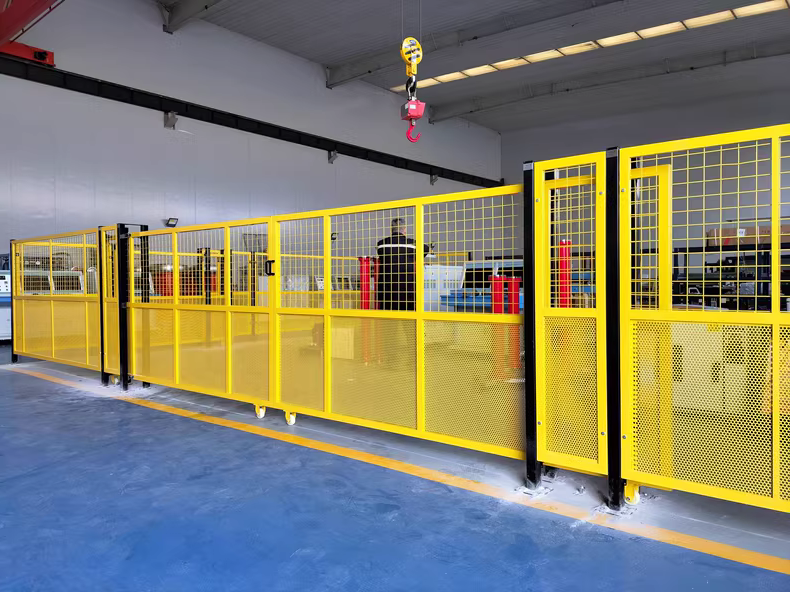
An intelligent equipment assembly factory has strict requirements for workshop standardization, ventilation and visual management. The factory needed to isolate automated assembly lines and manual working areas. The isolation fence was required to ensure safety protection, facilitate real-time observation of equipment operation, and keep the overall workshop style neat and unified. Traditional mesh fences looked rough while solid panels affected daily inspection work.
We adopted high-standard powder-coated welded perforated fences for this project. The integrated welded frame enhances overall rigidity, resisting long-term mechanical vibration without deformation. The orderly perforated design balances safety, ventilation and visualization, allowing management personnel to observe production status at any time without entering the working area. The smooth and uniform panel surface is easy to clean and free of dust accumulation, perfectly matching the high-standard standardized management of intelligent assembly workshops. The overall workshop layout became more regular and professional after the project completion.
Electronics Factory Humid Workshop Isolation Project
A consumer electronics assembly workshop is located in a humid southern coastal area. The workshop requires frequent ventilation and strict dust control. Ordinary iron fences are easy to rust and deform in humid environments, while low-quality perforated panels are prone to hole deformation and rough edges after long-term use, which may scratch electronic components and cables. The client needed durable, anti-corrosion and high-precision isolation fences.
BDINDUSTRIAL provided hot-dip galvanized welded perforated workshop fences for this project. The overall full-welded structure is firm and reliable with no burrs or sharp edges, avoiding scratch damage to cables and accessories. The professional anti-corrosion surface treatment effectively resists humid air oxidation and slight corrosive substances, preventing rust and aging. The uniform perforated structure realizes continuous air circulation, reducing indoor humidity and avoiding moisture damage to electronic equipment. After long-term operation, the fence remains flat, stable and rust-free, fully meeting the long-term production needs of electronic workshops.
Core Product Advantages of BDINDUSTRIAL Welded & Perforated Workshop Fence
Integrated Welded Structure, Stable and Deformation-Proof
Different from traditional bolt-spliced perforated fences, our products adopt full-panel integral welding molding. The frame and perforated panel are perfectly integrated without splicing gaps or loose connecting parts. The overall structural rigidity is greatly improved, which can resist long-term equipment vibration and occasional minor collisions, maintaining stable zoning effects for a long time without shaking or displacement.
Scientific Perforation Balances Ventilation and Dust Prevention
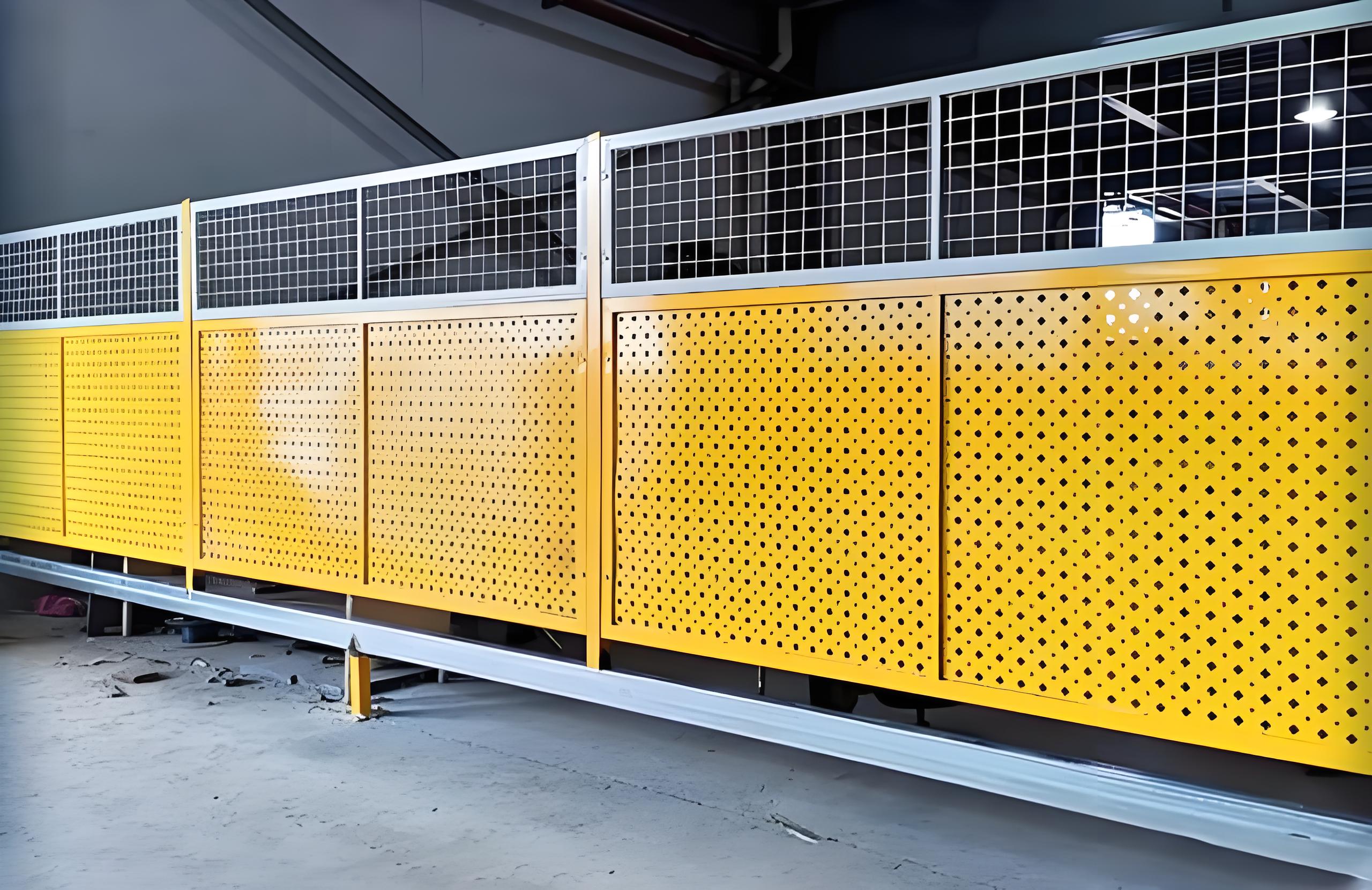
All holes are precisely punched and evenly arranged by automated equipment. The standardized pore size ensures maximum air circulation and light transmission, improving workshop working environment. Meanwhile, it effectively blocks fine processing dust, debris and sparks, avoiding cross-area pollution. It solves the industry pain point that mesh fences cannot prevent dust and solid fences cannot ventilate.
Multiple Anti-Corrosion Treatments for Long Service Life
We support electrostatic powder coating and hot-dip galvanizing two mainstream surface treatments. Powder-coated panels feature smooth surface, uniform color and dust resistance, suitable for indoor clean workshops. Hot-dip galvanized products have strong anti-rust and anti-corrosion capabilities, adapting to humid, dusty and slightly corrosive industrial environments, greatly reducing later maintenance and replacement costs.
Neat Appearance Improves Workshop Standardization
The flat perforated panel and seamless welded frame present a unified and high-end industrial appearance. Compared with rough mesh fences and bulky solid partitions, this fence improves the overall grade and standardization of modern factories. It is very suitable for factory image upgrading, standardized workshop assessment and industrial park transformation projects.
Modular Assembly Saves Installation and Adjustment Cost
Adopting standardized modular design, all matching columns, bases and accessories are highly universal. On-site installation is simple and fast without secondary cutting and welding, saving labor time and engineering costs. The detachable structure supports free disassembly and rearrangement, facilitating later production line adjustment and workshop layout optimization.
If you are looking for high-stability welded & perforated type workshop fences that balance ventilation, dust prevention and safety isolation for factory renovation and standardized zoning, feel free to contact BDINDUSTRIAL. We provide free site layout planning, personalized custom solutions and factory direct prices to create efficient and standardized safety isolation systems for your workshops.
FAQ
1. What are the unique advantages of welded & perforated workshop fences compared with ordinary fences?
This type of fence perfectly balances the core needs of industrial workshops. The integral welded structure ensures higher stability and durability than spliced fences. The uniform perforated design achieves ventilation, light transmission and dust isolation at the same time, avoiding the defects of poor air circulation for solid fences and poor dust prevention for mesh fences. It is the most cost-effective choice for modern refined workshop management.
2. What scenarios are welded and perforated workshop fences suitable for?
They are widely used in mechanical processing workshops, precision assembly workshops, electronic production workshops, automated robot working areas and warehouse partition zones. Especially suitable for factory areas that require both ventilation and heat dissipation, dust control, real-time visual inspection and standardized safety isolation.
3. Can BDINDUSTRIAL customize the hole size and fence dimensions?
Yes. We support full non-standard customization. According to customer workshop environment, dust particle size and zoning requirements, we can adjust hole diameter, hole spacing, fence height, width and plate thickness. We also customize special-shaped panels and matching safety doors to adapt to irregular workshop layouts and special engineering needs.
4. Are perforated workshop fences easy to clean and maintain?
Very easy to maintain. The integrated welded structure has no dead corners or loose parts, avoiding dust accumulation in gaps. The smooth anti-corrosion surface is not easy to adhere to oil stains and dust. Daily cleaning only requires simple wiping and dust removal. The firm surface coating is not easy to peel or fade, realizing long-term maintenance-free use.
5. Is the integral welded structure stronger than bolt-assembled perforated fences?
Absolutely yes. The integral full-welded structure forms an integrated force-bearing system with uniform stress distribution. It can resist long-term equipment vibration and occasional collision without loosening or deformation. Bolt-assembled fences are prone to bolt loosening and panel shaking after long-term use, while our welded structure fundamentally solves this stability problem.