


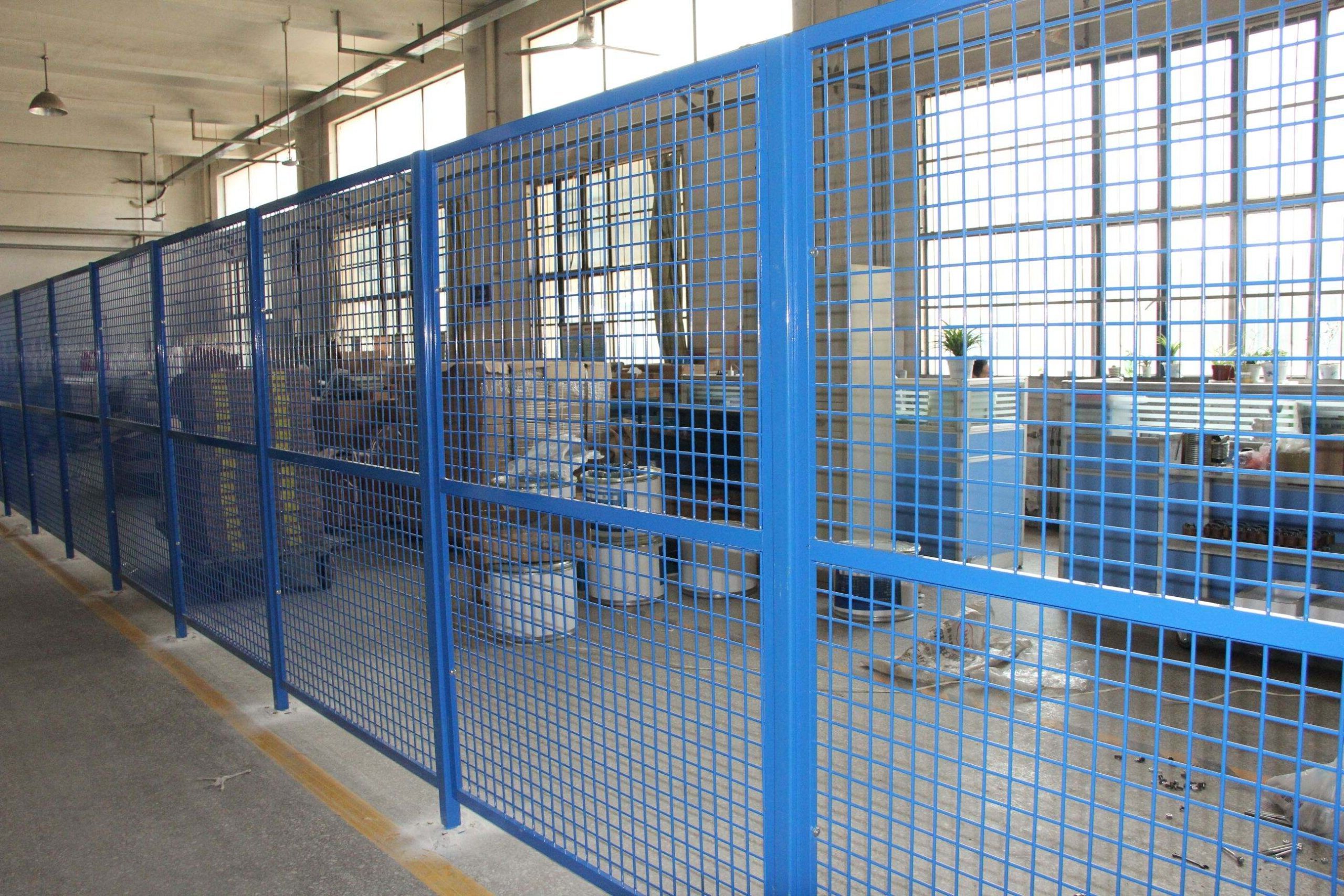
Many warehouse managers mix up modular guarding with fixed welded barriers, and BDINDUSTRIAL explains that modular warehouse guarding fence is a bolt-together safety system built to adapt to changing workflows, not just lock off one static area. Unlike permanent steel partitions that require cutting or grinding when layouts shift, modular guarding uses interchangeable posts, panels and gates. It is designed to solve real, day-to-day warehouse headaches: traffic conflicts, uncontrolled access to automated equipment, unsecured high-value stock and audit gaps. This guide breaks down the core uses you will see in modern distribution centres and manufacturing warehouses.
Separate pedestrian walkways from forklift and AGV traffic
One of the most common uses is creating clear, physical separation between staff on foot and powered industrial equipment. Floor tape and painted lines are easy to ignore, but modular fencing creates a hard boundary that guides traffic flow.
Fixed pedestrian corridor definition
You can line continuous walkways along rack aisles and packing zones. Workers stay inside marked paths, while forklifts and AMRs follow their own lanes, cutting down near-miss incidents.
Temporary traffic rerouting during peak seasons
When order volumes spike and you need to re-route pallet trucks around staging zones, you can take apart sections and rebuild new lanes without construction work.
Enclose robot, AGV and automated machine cells
Automation zones are the fastest-growing use case for modular warehouse guarding fence. It meets ISO 13857 reach distance rules and supports safety interlock hardware for automated equipment.
Permanent robot cell perimeter guarding
Standard mesh panels lock off robotic welding, picking and sorting robots. Lockable gates can be fitted with interlock switches that pause machine motion once opened for maintenance.
Quick reconfiguration for new automation stations
If you add a new AMR or sorting cell later, you can extend the existing fence run using matching posts and brackets, instead of buying a completely separate guarding system.
Secure restricted inventory, spare parts and tool cages
Warehouses always have stock that needs tighter access control. Modular fencing works as a flexible security cage without permanent walls.
High-value inventory segregation
Electronics, spare motor parts or premium finished goods can be fenced off with lockable swing or sliding gates. Only approved staff with keys or access cards can enter.
Tool and maintenance storage locking zones
Maintenance teams often lose small tools or loan them out without records. A fenced tool cage keeps everything contained and makes inventory checks simpler.
Divide warehouse zones for workflow and housekeeping
Large open warehouses easily turn disorganised when receiving, packing, staging and dispatch zones overlap. Modular fencing helps split the floor into functional zones.
Partition receiving and outbound staging areas
Separate incoming pallets from ready-to-ship orders to avoid mix-ups and mis-ships. The fence creates a visual and physical divider for your picking teams.
Isolate messy or high-dust work zones
If you have packaging shredding, rework or repackaging areas that generate debris, you can enclose these sections to keep dust and clutter away from clean packing zones.
Support temporary guarding and safety audit compliance
Modular warehouse guarding fence is also widely used for short-term hazard isolation and proving safety controls during third-party audits.
Temporary hazard isolation during repairs
When racking or conveyor systems need breakdown maintenance, you can set up a quick fenced perimeter to keep unrelated staff away from the work zone.
Documentable safety controls for audits
Labeled modular guarding with correct standoff distances is accepted for OSHA, CE and local industrial safety audits. You can adjust the layout quickly if an auditor flags gaps in your current setup.
If you are looking for flexible, reusable modular warehouse guarding fence to fit robot cells, pedestrian lanes or secure storage cages, contact BDINDUSTRIAL. Our team can review your warehouse layout, recommend panel styles and gate options, and provide drawings tailored to your safety and workflow needs.
FAQ
What makes modular warehouse guarding fence different from regular welded fencing?
Modular systems use bolted connections rather than site welding. Panels, posts and gates can be disassembled, moved and reused many times. Fixed welded fencing is permanent and hard to adjust when your warehouse layout changes.
Can modular warehouse guarding fence work with safety interlock gates?
Yes. BDINDUSTRIAL’s modular frames come pre-drilled for interlock switches. This is the standard setup for robot and AGV cells, so equipment stops automatically when the gate is opened.
Is modular warehouse guarding fence suitable for heavy forklift impact zones?
Standard modular mesh panels are designed for area separation and hand-reach protection. For high-speed forklift impact points, pair the fencing with dedicated heavy guard rails, as standard mesh panels are not built for repeated heavy hits.
Can I install modular warehouse guarding fence by myself?
Yes, the modular bolted design is made for on-site assembly without welding. You just need accurate measurements and proper anchoring to concrete floors. For automation guarding zones, it is best to verify safety distances with your supplier.
What panel types can fit into one modular warehouse guarding system?
You can mix welded wire mesh, perforated metal and acrylic panels on the same post framework. This lets you use mesh for visibility in robot zones and perforated panels for dust or spark containment where needed.