


A dependable Security Fence does more than simply define a boundary. It safeguards your location, minimizes ongoing care, promotes extended durability, and addresses the actual threats present near your property. If you oversee an airport, a storage facility, an industrial area, a utility installation, a building project, or a sensitive boundary line, the appropriate steel fencing setup assists in managing entry points. At the same time, it avoids creating extra upkeep tasks.
BD FENCE serves as a skilled metal fence producer located in Anping, China. Its production staff brings over 30 years of practical knowledge to the work. The firm runs a spacious 15,000㎡ facility equipped with more than 80 modern devices. These include automated wire mesh welding tools, precision laser cutting units, PE coating systems, and electrostatic powder coating setups. The lineup of items includes welded mesh fences, 358 fences, airport fences, electric fence arrangements, defensive barriers, entrance gates, and protective add-ons. For purchasers, builders, and development managers, the key benefit remains straightforward. You receive useful technical guidance, consistent quality oversight, affordable rates, prompt shipping, and follow-up assistance. This support ensures that initiatives progress efficiently from planning to setup.
How to Match a Security Fence With Your Site Needs
Prior to selecting a fence, evaluate the challenges the location must withstand. For instance, a storage building might require mesh that resists climbing. An airport often demands broad coverage for boundary management. A defense or urgent location could benefit from rapid setup options. A power facility might call for both a solid barrier and integrated alert features.
Start With Risk Level
For locations with minimal to moderate threats, a basic welded mesh fence often suffices effectively. However, if the space holds costly machinery, regulates vital entryways, or lies close to busy pathways, a more robust arrangement becomes essential.
In cases of elevated threats, a Security Fence ought to hinder climbing, slicing, and unauthorized breaches. Thus, features like compact mesh, sturdy supports, enhanced connectors, and upper safeguards play a crucial role.
Consider Maintenance and Weather Resistance
Steel fencing needs to endure moisture, direct sun, gusts, and regular outdoor conditions. Processes such as hot-dip galvanizing, powder coating, and PE coating effectively curb corrosion and prolong operational lifespan.
Moreover, a fence requiring little upkeep conserves effort. When the panels, supports, and connectors feature designs that ensure firm placement, you invest less effort in fixing unstable elements or swapping out harmed portions.
Choose a System That Can Grow With the Site
Your initiative might enlarge in the future. Consequently, you could require additional gates, electrical safeguards, razor wire additions, or supplementary panels. A modular fencing arrangement offers greater adaptability.
For this reason, avoid decisions based solely on cost. Instead, assess the framework, intended use, protective layers, supplementary items, and enduring requirements of the project.
Best Fence Types for Different Security Applications
Various locations demand distinct safeguarding objectives. The products outlined below align with differing threat intensities, area dimensions, and setup demands.
358 Fence for Anti-Climb Protection
A 358 Fence provides a solid option when visibility and robust security must coexist. Its small mesh gaps effectively prevent scaling and complicate severing with typical instruments.
This type suits correctional facilities, information hubs, energy plants, storage units, manufacturing plants, and controlled sectors. It accommodates square supports, I-shaped supports, or H beams. Panel elevations range from roughly 1830 mm up to 3000 mm. For areas seeking a lasting Security Fence with a neat look, this stands as one of the most feasible selections.
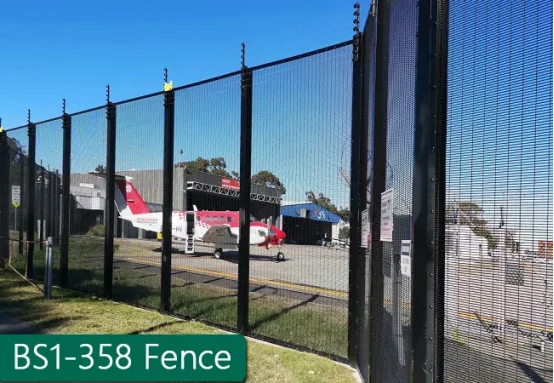
Airport Fence for Large Perimeter Control
Airport Fence setups are crafted for extended boundary stretches, off-limits zones, landing strips, passenger terminals, and operational areas. They integrate 3D fence panels, chain link configurations, or 358 high-security panels.
To enhance boundary defense, these systems incorporate Y-arm supports, barbed wire, razor wire, subsurface mounting, or foundation mounting. Such elements create a multi-tiered approach that regulates entry while maintaining clear sightlines and ease of oversight.
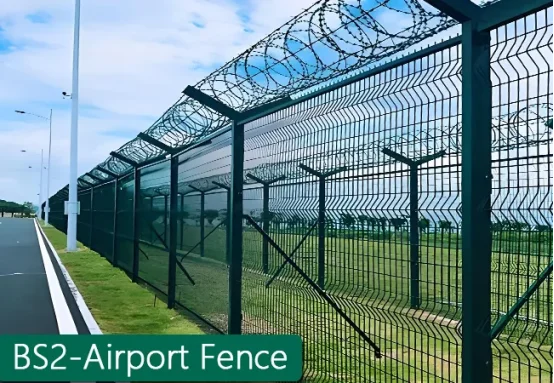
Defensive Barriers for Fast and Heavy-Duty Protection
Defensive Barriers prove valuable in scenarios demanding swift placement and substantial resistance to impacts. They find common use in defense zones, crisis safeguards, roadway initiatives, frontier management, and interim high-threat regions.
The arrangement employs welded mesh combined with spring wire. Multiple military-grade sizes remain available. Since the barrier units deploy rapidly, they secure expansive regions more quickly than numerous stationary fencing choices.
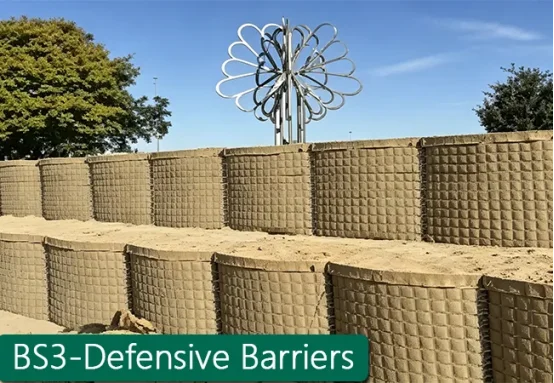
Add Active and Reinforced Protection Where Needed
Certain locations require beyond mere steel panels. In situations of increased danger, incorporate electrical discouragement, razor wire, or barbed wire to form a more fortified multi-layer setup.
Security Electric Fence for Active Deterrence
A Security Electric Fence introduces dynamic safeguarding to an existing physical fence boundary. It pairs effectively with 2D fences, 3D fences, 358 fences, chain link fences, palisade fences, and tubular fence systems.
The setup encompasses an energizer unit, alarm keypad controller, terminal rods, insulators, warning signs, lightning arresters, tighteners, and audible-visual alarms. These components render it ideal for sites requiring both entry regulation and breach notifications.
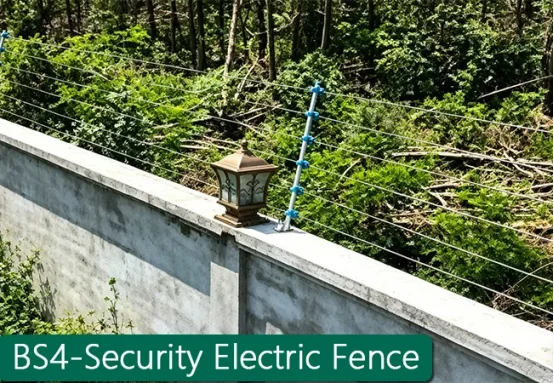
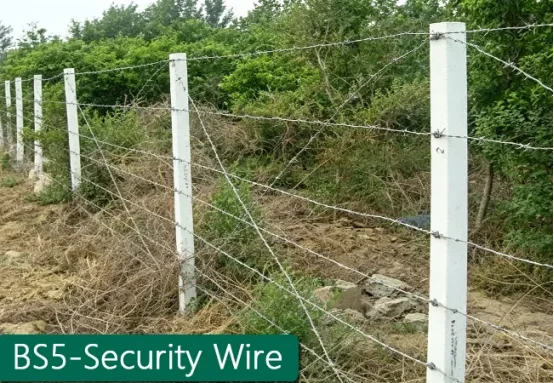
Security Wire for Top-Level Reinforcement
Security Wire bolsters the upper or external portion of a fence. Choices encompass barbed wire, spikes, concertina razor wire, flat razor wire, and blade razor mesh.
This addition proves wise for manufacturing operations, storage buildings, airports, correctional institutions, frontier zones, and energy installations. When positioned atop a Security Fence, it heightens discouragement without necessitating a complete system overhaul.
Combine Systems for Better Protection
Optimal outcomes frequently arise from integrating various products. For example, employ 358 panels as the primary obstacle, incorporate electric fencing for alert capabilities, and affix razor wire along the upper edge.
In airport settings, utilize chain link or 3D panels over lengthy segments. Then, integrate elevated-security fencing around vital zones. This method balances expenses while prioritizing safeguarding for the most critical sections.
What to Check Before You Place an Order
An effective fence strategy demands clarity prior to manufacturing commencement. This approach prevents setbacks, incorrect details, and mounting difficulties.
Confirm Height, Mesh, Wire, and Post Type
Begin by verifying the fence elevation, mesh dimensions, wire thickness, and support configuration. A 358 fence demands precise mesh for effective anti-climb functionality. Airport fencing might involve taller panels and overhead arms. Defensive barriers require appropriate module dimensions for proper placement.
Additionally, verify the support variety. Square supports, I supports, H beams, round supports, and Y-arm supports each fulfill specific functions.
Select the Right Surface Treatment
Surface treatment influences longevity. Galvanizing aids in warding off rust. Powder coating enhances aesthetics and guards against deterioration. PE coating delivers additional resilience in outdoor settings.
In coastal regions, damp climates, or manufacturing surroundings, the quality of coatings holds greater significance. A fence appearing more economical initially might incur higher costs over time if corrosion occurs prematurely.
Plan Gates, Accessories, and Installation
Avoid overlooking supplementary items as minor aspects. Elements like clips, clamps, bases, bolts, hinges, warning signs, electrical parts, and upper wires all impact overall effectiveness.
Furthermore, determine the mounting method between subsurface embedding and base plate usage. Embedded supports typically offer reliable long-term firmness. Base plates, on the other hand, adapt well to concrete surfaces and locations favoring unobtrusive setups.
Why Service Matters After Product Selection
Even superior steel fencing relies on precise fabrication, secure packing, and on-schedule transport. A capable provider ought to aid your endeavor from blueprint evaluation through to ultimate dispatch.
Quality Control Reduces Project Risk
Dependable fabrication involves examinations of wire thickness, mesh measurements, panel breadth and elevation, support dimensions, coating integrity, and packing verification.
These procedures guarantee that panels align correctly during on-site assembly. They also ensure the system functions reliably following installation.
Customization Helps Fit Complex Sites
Numerous initiatives deviate from standard formats. You might necessitate a unique elevation, shade, support density, mesh configuration, gate breadth, or overhead safeguard layout.
A provider possessing robust production resources can tailor the fencing arrangement to suit the location precisely. Rather than adapting your project to a rigid template, this flexibility accommodates specific demands effectively.
Contact the Right Team Early
For Security Fence requirements in commercial, manufacturing, airport, defense, or public works endeavors, initiating dialogue promptly conserves time. Provide details on your location extent, blueprints, threat intensity, coating preferences, and transport timeline.
The suitable group can suggest the most fitting product combination, formulate an appropriate estimate, and offer continued assistance post-shipment.
Conclusion
Selecting the proper Security Fence involves aligning the item with its designated purpose. Opt for 358 Fence to achieve anti-climb safeguarding, Airport Fence for extensive boundary oversight, Defensive Barriers for rapid arrangement, Security Electric Fence for dynamic discouragement, and Security Wire for enhanced upper fortification. By merging resilient components, suitable coatings, trustworthy add-ons, and expert assistance, your fence evolves into a sustained investment in security.
FAQ
Q1: What Is the Best Security Fence for High-Risk Sites?
A1: 358 Fence frequently emerges as the top selection for high-risk locations. Its compact mesh effectively obstructs climbing and severing while preserving unobstructed views.
Q2: Can Airport Fence Be Used Outside Airports?
A2: Yes. It also applies to distribution centers, manufacturing districts, transportation centers, and expansive private installations that demand prolonged boundary safeguarding.
Q3: When Should You Use Defensive Barriers?
A3: Employ them in situations requiring swift arrangement, interim safeguarding, or robust division for defense, crisis, roadway, or frontier undertakings.
Q4: Does Electric Fencing Replace a Steel Fence?
A4: No. It typically functions as an supplementary layer. The steel fence establishes the tangible obstacle, whereas the electric arrangement provides discouragement and alert capabilities.
Q5: How Can You Make a Security Fence Last Longer?
A5: Select an appropriate steel framework, adequate surface treatments, superior connectors, and a provider offering thorough inspections, secure packing, reliable transport, and ongoing support.