

x
Send Your Inquiry Today
Quick Quote
What Are Welded & Perforated Workshop Isolation Fences and Why Are They Essential?

What Are Welded & Perforated Workshop Isolation Fences and Why Are They Essential?

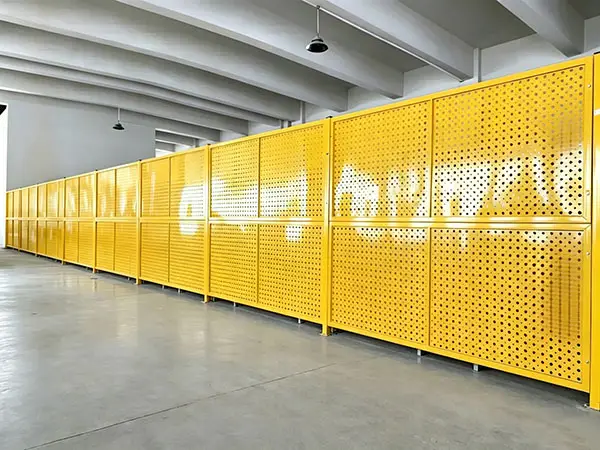
Modern industrial sites adopt lean production, smart management and rigorous safety standards. Complicated workshop layouts, dense equipment and higher cross-operation risks boost needs for efficient space isolation. The welded mesh + perforated plate combined workshop isolation fence has become essential for factories, warehouses and logistics hubs: it divides hazardous and working zones, streamlines workflows, improves visual management and sustains stable operations.
Scientific space isolation matters for safety, efficiency and compliance across heavy machinery, electronics, precision machining plants and big warehouses. This composite fence outperforms plain wire mesh (weak debris resistance) and full solid panels (low visibility) with balanced safety, sightlines, ventilation and flexibility.
BDINDUSTRIAL is an experienced, globally trusted maker of such barriers. Boasting 30+ years’ manufacturing history, a 15,000㎡ plant, 80+ advanced machines and strict quality checks, it delivers sturdy metal protective products to 70+ nations. Its full-process technologies (precision welding, hot-dip galvanizing, PE and powder coating) enable fences to withstand damp, dusty industrial conditions. It offers custom sizing, thickness and height plus full-cycle project support for contractors and asset owners valuing stable quality and timely service.

What Are Welded & Perforated Workshop Isolation Fences and Why Are They Essential?

Industrial isolation systems have become a cornerstone of modern manufacturing safety and efficiency. Before selecting the right solution, it’s crucial to understand how these combined-structure fences work and their irreplaceable role in daily operations.

The Core Functions of Welded & Perforated Isolation Fences

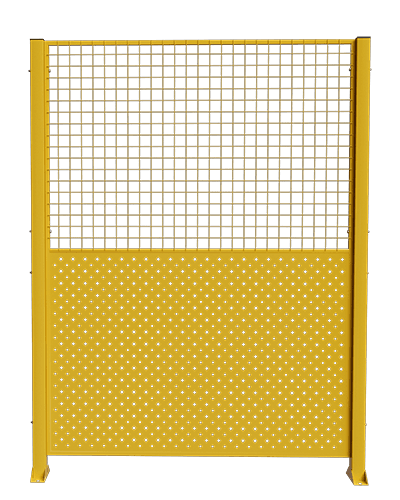
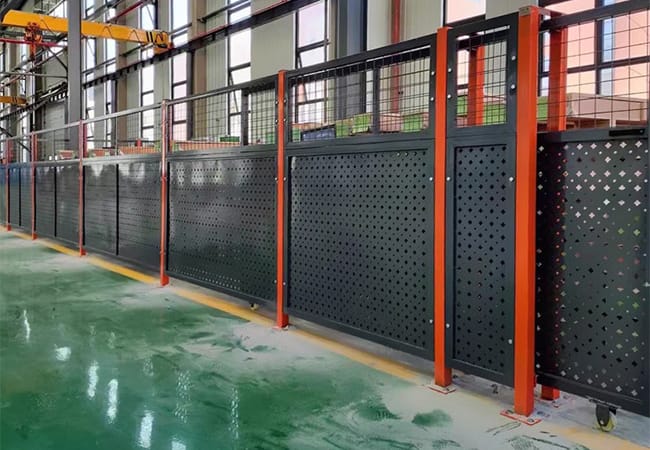
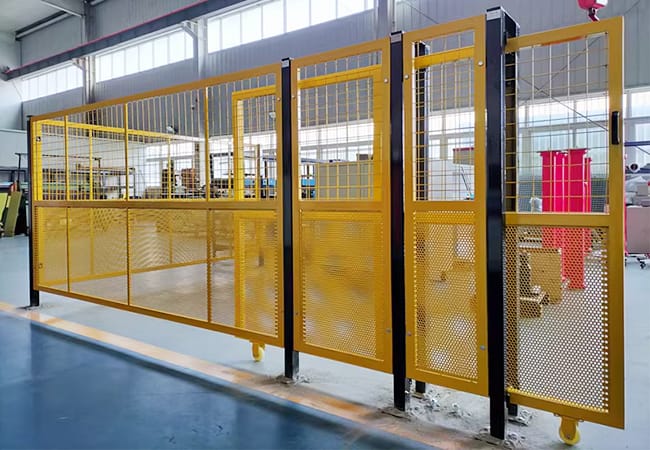
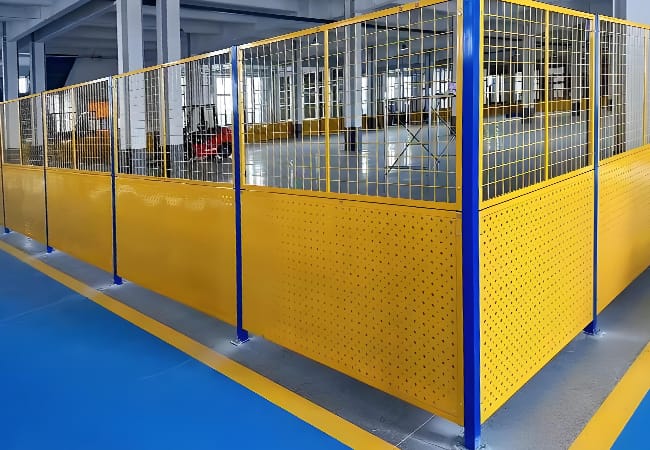
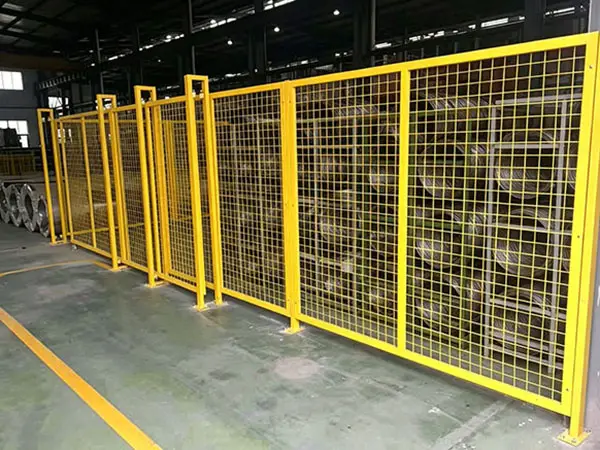
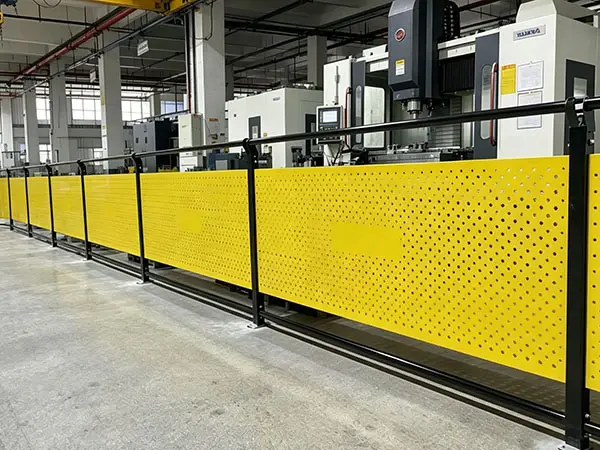
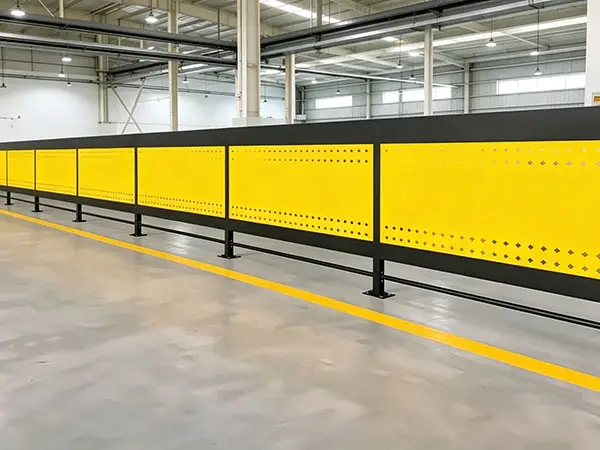
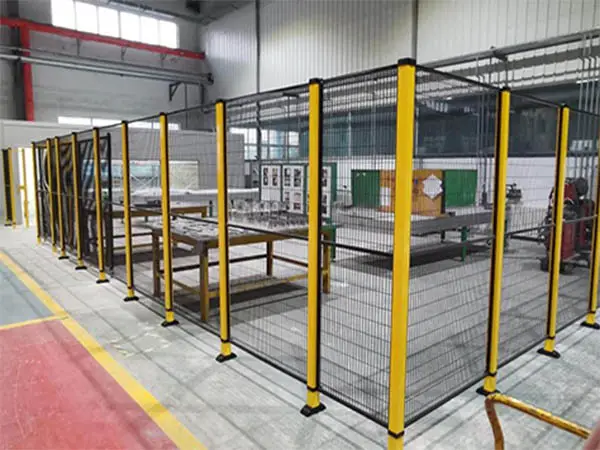
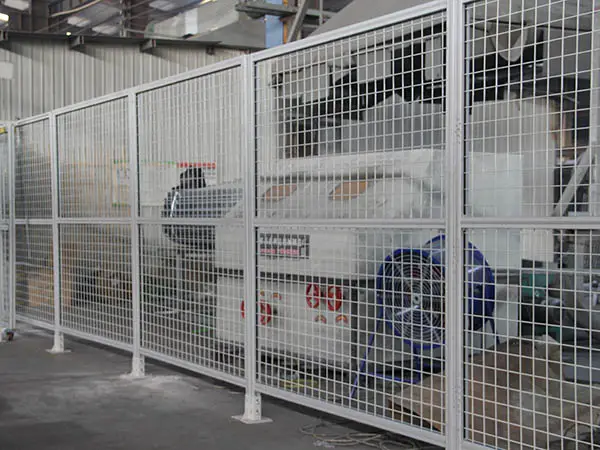
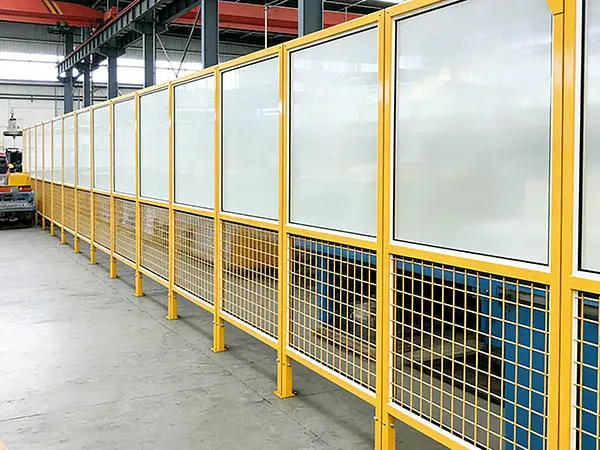
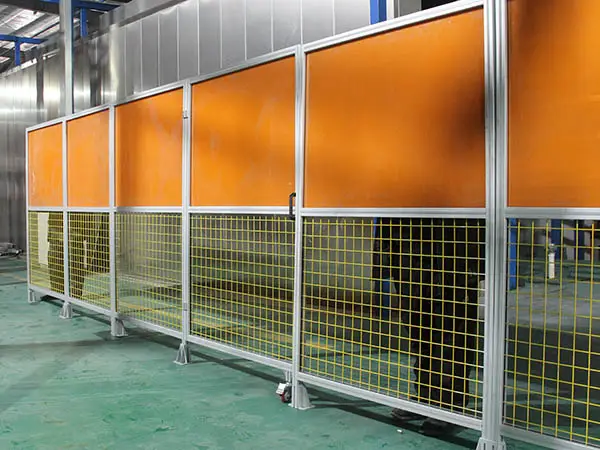
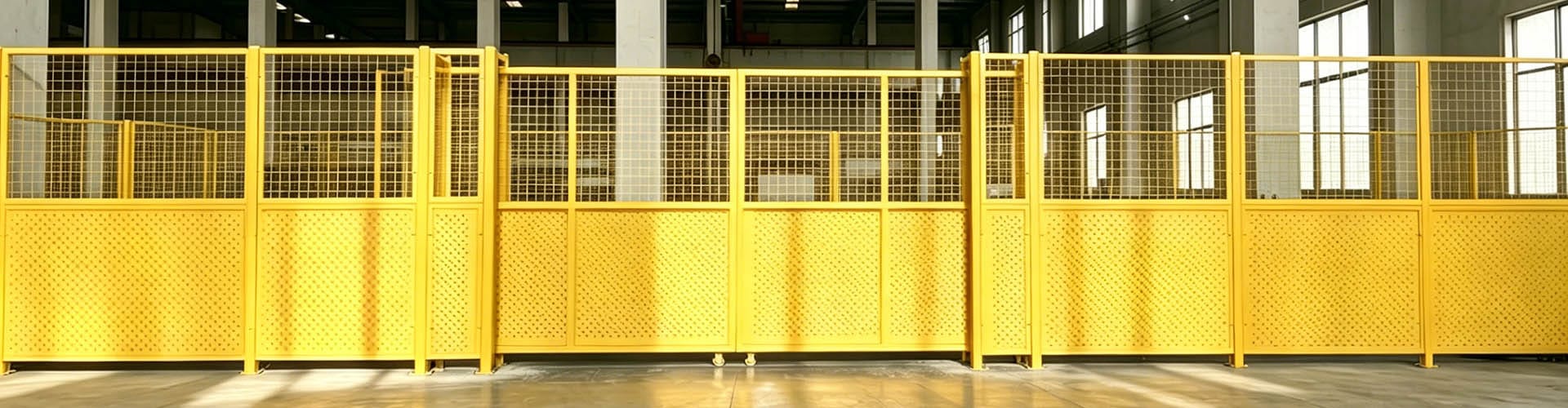
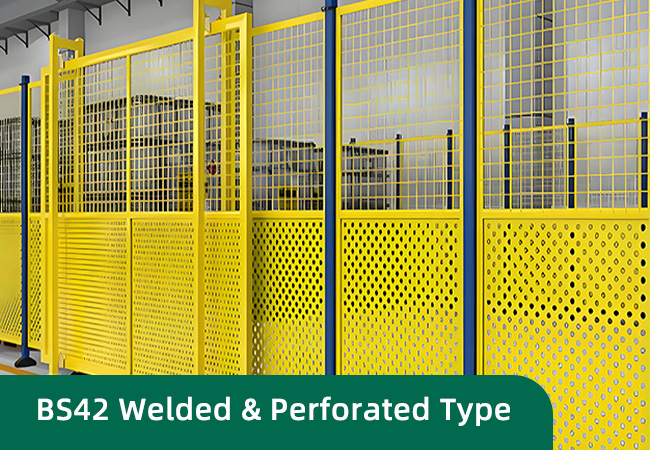
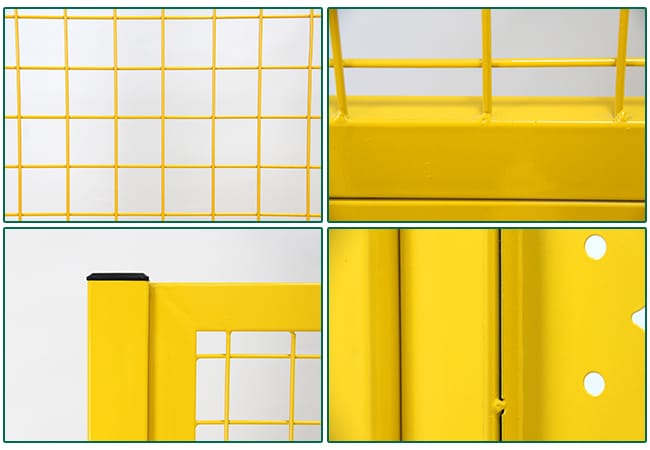
A Welded & Perforated Workshop Isolation Fence is an integrated protective system designed for spatial division and safety isolation in industrial settings. Its unique “upper welded mesh + lower perforated plate” structure merges the advantages of two materials: the upper welded wire mesh (typically 50×50mm or 30×30mm grid) ensures high visibility and ventilation, while the lower perforated plate (1.0-1.5m high, with 3-8mm thick steel and dense hole patterns) provides strong impact resistance and debris blocking. Unlike solid walls that hinder supervision or single-layer mesh that fails to prevent small parts from falling, this combined design achieves a perfect balance between security and practicality.
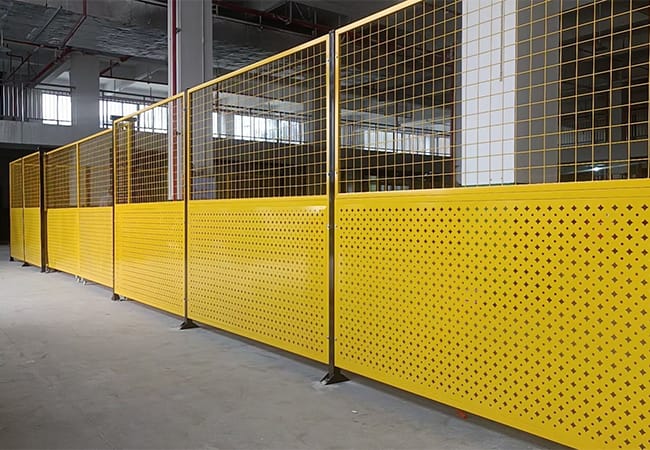
This structure allows supervisors to monitor operations in isolated areas (e.g., robotic workstations, welding zones) in real time while preventing unauthorized access. In facilities with dynamic production flows, clear spatial division helps optimize logistics routes, reduce cross-interference between personnel and equipment, and improve overall operational efficiency.

How Welded & Perforated Fences Enhance Operational Safety

Poorly designed isolation systems can lead to safety hazards such as accidental equipment contact, debris splashing, unauthorized access to hazardous areas, and workflow disruptions. A properly installed Welded & Perforated Isolation Fence addresses these risks through multi-dimensional protection:
  • Debris Blocking: The lower perforated plate effectively blocks falling tools, small parts, weld spatter, and dust, preventing ground-level safety incidents and equipment damage.
  • Visual Supervision: The upper welded mesh maintains 85%+ visibility, allowing managers and safety personnel to monitor isolated zones without compromising protection—critical for high-risk areas like high-voltage equipment zones or heavy machinery workstations.
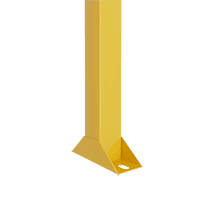
  • Impact Resistance: Rigid welded structures (with wire diameter 3-6mm) and reinforced steel columns (thickness 2.0-3.0mm) resist collisions from forklifts, pallet jacks, and heavy materials, avoiding fence collapse or deformation.
  • Compliance Support: By clearly dividing functional zones (e.g., production, storage, passage), the fence helps enterprises meet 5S lean management and OSHA safety compliance requirements, reducing accident liability risks.
In industrial environments where continuous operation is critical, stable isolation also improves long-term system reliability. Clear zone division enables quick identification of potential hazards during inspections, reducing response time for safety incidents.

Industries That Commonly Use Welded & Perforated Isolation Fences

These versatile isolation solutions are widely adopted across industries that require strict spatial management and safety protection:
  • Manufacturing Plants: Separating welding zones, stamping areas, robotic workstations, and assembly lines to prevent cross-hazards; isolating heavy machinery to avoid accidental contact.
  • Logistics & Warehousing: Dividing goods storage zones, forklift channels, and pedestrian walkways; isolating hazardous material storage areas and temporary inventory zones to optimize traffic flow and prevent collisions.
  • Electronic & Precision Processing: Creating dust-free isolation zones for sensitive equipment; the smooth surface of the perforated plate is easy to clean, complying with GMP clean standards.
  • Chemical & Pharmaceutical Facilities: Isolating corrosive material storage areas with anti-corrosion surface treatments (e.g., hot-dip galvanizing + powder coating) to resist chemical erosion.
  • Automotive Production: Separating assembly lines, painting booths, and parts storage; the fence’s impact resistance withstands frequent logistics vehicle movement.
As industrial infrastructure becomes more technology-driven, the demand for flexible, scalable, and compliant isolation solutions continues to grow globally.

Why Welded & Perforated Combined Structures Are Gaining Popularity

Traditional isolation methods—such as solid steel plates, single-layer wire mesh, or temporary barriers—often have limitations in safety, visibility, or adaptability. The Welded & Perforated combined design addresses these pain points with a multi-functional approach tailored to modern industrial needs.

Balanced Safety & Visual Management

The biggest advantage of this combined structure is its ability to reconcile security and visibility. Unlike solid walls that create blind spots or single-layer mesh that fails to block small debris, it eliminates safety hazards while enabling real-time supervision. This is particularly valuable for lean production workshops, where managers need to monitor multiple processes simultaneously without disrupting operations.

Optimized Ventilation & Environmental Adaptability

Industrial workshops often face challenges with heat accumulation, dust buildup, or humidity. The open structure of the welded mesh upper section and perforated lower plate ensures unobstructed airflow, reducing heat buildup around equipment and improving indoor air circulation. For high-temperature zones (e.g., forging workshops) or dust-prone areas (e.g., grinding workshops), this design helps maintain a stable working environment and extends equipment lifespan. Additionally, the perforated plate’s smooth surface is easy to clean, avoiding dust accumulation and meeting hygiene requirements for electronic or pharmaceutical production.

Flexible Installation & Layout Adaptability

Welded & Perforated Isolation Fences adopt a modular design, allowing quick assembly without complex tools. Contractors can adjust the length and layout on-site according to project needs, and the option of mobile footwheels (for temporary isolation) or fixed expansion bolts (for permanent use) enhances flexibility. This is extremely useful when workshop layouts change due to production line upgrades or new project launches. Faster installation also helps reduce labor costs and shorten project schedules.

Long-Term Durability & Low Maintenance

The fence’s core materials—high-quality Q235 steel for the mesh and perforated plate—undergo strict surface treatments:
  • Hot-dip galvanizing: Provides corrosion resistance with a zinc layer thickness ≥80μm, suitable for humid or outdoor environments.
  • Powder coating/PE coating: Adds a 60-80μm plastic layer on top of galvanizing, available in warning colors (yellow, red) or industrial colors (blue, green), enhancing corrosion resistance and aesthetics.
  • Dual treatment (galvanizing + coating): Offers 1000+ hours of salt spray resistance, ensuring 10+ years of service life in harsh industrial environments with minimal maintenance.
Unlike wooden barriers (prone to rotting) or plastic fences (weak impact resistance), the welded & perforated structure requires only regular wiping to remove dust, reducing long-term operational costs.

How to Choose the Right Welded & Perforated Isolation Fence for Your Project

Choosing the correct system requires more than selecting a standard size. You should evaluate project conditions carefully before making a purchasing decision.

Defining Core Requirements & Load Capacity

First, clarify the primary purpose: Is it for high-risk area protection, simple functional division, or dust-free isolation?
  • For heavy-duty protection (e.g., machinery isolation, forklift collision prevention): Select a fence with wire diameter ≥5mm, perforated plate thickness ≥6mm, and reinforced columns.
  • For general division (e.g., warehouse zoning, pedestrian channels): Opt for wire diameter 3-4mm and perforated plate thickness 3-4mm to balance cost and performance.
  • For clean environments (e.g., electronic workshops): Choose a smooth perforated plate with small holes (≤5mm) and powder coating to avoid dust accumulation.
Also, calculate the required height: Common heights are 1.2m (pedestrian separation), 1.5m (general equipment isolation), and 2.0m+ (high-risk zone or heavy machinery isolation).

Selecting Suitable Surface Treatments

Environmental conditions directly affect product lifespan. Choose surface treatments based on your workshop environment:
  • Indoor dry environments (e.g., office partitions, light assembly lines): Standard galvanizing or powder coating is sufficient.
  • Humid/dusty environments (e.g., warehouses, washing zones): Hot-dip galvanizing + powder coating for dual corrosion resistance.
  • Chemical/coastal environments (e.g., chemical plants, coastal factories): PE coating with enhanced thickness to resist salt spray and chemical erosion.

Prioritizing Flexible & Modular Designs

Modern projects often involve changing layouts and equipment upgrades. Flexible fence systems simplify future modifications:
  • Choose modular components (detachable mesh and columns) for easy extension or relocation.
  • For dynamic production lines, select mobile fences with footwheels (lockable) to adapt to temporary layout adjustments.
  • Ensure compatibility with accessories (e.g., access doors, observation windows, warning signs) to enhance practicality.

Verifying Manufacturing Quality & Certification

Product quality directly impacts safety and service life. Prioritize manufacturers with:
  • Strict quality inspections: Check for uniform mesh welding (no missing welds), flat perforated plates (no burrs), and consistent coating thickness (no peeling).
  • Certification compliance: ISO9001 quality management system, CE product certification, and salt spray test reports.
  • Stable supply capacity: Ensure the manufacturer can meet large-order demands and provide timely delivery for project schedules.

Installation and Maintenance Tips for Better Performance

Good installation practices improve both safety and operational efficiency. Proper maintenance also helps extend the lifespan of the entire isolation system.

Planning Layouts Before Installation

Before installation begins, evaluate the workshop layout to:
  • Avoid blocking fire exits, emergency channels, or equipment maintenance access.
  • Mark column positions with accurate spacing (2.5-3.0m per column) to ensure structural stability.
  • Plan access points (e.g., swing doors, sliding doors) at key locations (e.g., production line entrances, warehouse exits) to facilitate workflow.
Proper planning helps technicians complete installation work more smoothly while reducing material waste during construction.

Ensuring Secure Installation

  • For fixed fences: Use expansion bolts (M12×100mm or larger) to anchor columns to concrete floors, ensuring verticality (deviation ≤2mm/m) to resist impact.
  • For mobile fences: Ensure footwheels have locking mechanisms and the base is weighted to prevent tipping.
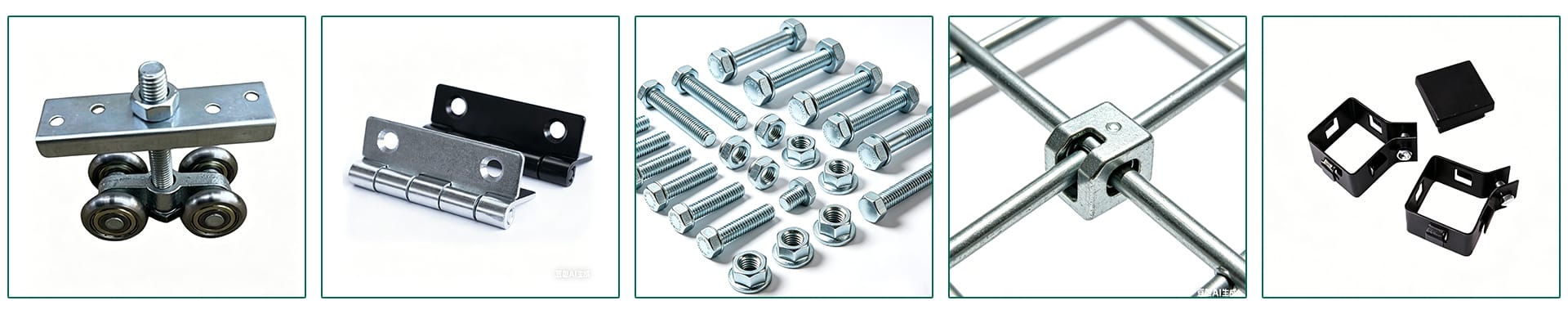
  • Check connections: Tighten all bolts and fasteners; ensure the mesh and perforated plate are securely attached to columns without gaps.

Performing Regular Inspection and Maintenance

  • Routine cleaning: Wipe the fence surface with a damp cloth quarterly to remove dust and oil stains, especially in clean workshops.
  • Regular inspections: Check for rust, loose bolts, or deformed components semi-annually. Touch up paint on scratched areas promptly to prevent corrosion.
  • Long-term maintenance: For coastal or chemical environments, conduct annual salt spray resistance tests and replace severely corroded parts to ensure safety.

Conclusion

As industrial infrastructure becomes more advanced, Welded & Perforated Workshop Isolation Fences continue to play a critical role in safe and efficient spatial management. Their unique combined structure provides an excellent balance of safety, visibility, durability, and flexibility—addressing the core needs of modern factories and warehouses.
From manufacturing plants to logistics centers and precision processing workshops, choosing the right isolation fence helps improve safety compliance, optimize workflow, and support future expansion. Product quality, corrosion resistance, and professional manufacturing capability also remain important factors when selecting a supplier.
If you need a durable and flexible isolation solution supported by advanced manufacturing and global project experience, BD FENCE’s Welded & Perforated Workshop Isolation Fences can provide dependable support for a wide range of industrial applications.

FAQ

Q1: What is a Welded & Perforated Workshop Isolation Fence used for?

A1: It is used for spatial division, safety isolation, and workflow optimization in industrial settings—such as separating hazardous zones, protecting equipment, dividing warehouse areas, and supporting lean management.

Q2: Why are welded & perforated combined structures more popular than single-layer mesh?

A2: They combine the visibility/ventilation of welded mesh with the impact resistance/debris blocking of perforated plates, solving the limitations of single-layer mesh (poor debris protection) and solid plates (lack of visibility).

Q3: Can these fences be used outdoors or in chemical environments?

A3: Yes. With hot-dip galvanizing + powder coating or PE coating, they offer strong corrosion resistance, making them suitable for outdoor use, humid warehouses, or chemical plants (with 1000+ hours of salt spray resistance).

Q4: How to select the right fence height and thickness?

A4: For pedestrian separation: 1.2m height, 3-4mm thickness; for general equipment isolation: 1.5m height, 4-5mm thickness; for high-risk zones/heavy machinery: 2.0m+ height, 5-6mm thickness.

Q5: Are the fences easy to modify or relocate?

A5: Yes. Modular design allows easy extension or disassembly. Mobile versions with footwheels can be relocated quickly, making them ideal for workshops with changing layouts.

Scroll to Top